HOW TO ELIMINATE A GOLF SLICE

In golf, a slice is a ball that spins clockwise and trails off to the right after the driver makes contact with it. For left handed golfers, the ball spins clockwise and trails off to the left. Every golfer wants to eliminate their golf slice. The main reason for this is that the face of the club is not square to the ball at contact. A few adjustments to your grip, positioning and swing path will help to correct this problem.

Get out your club and get into the correct ‘driver’ stance position. Bend your knees slightly and grip the club firmly, but not too hard. A weak grip can cause slices, but gripping the handle too hard will give you cramps and cause the ball to curve to the left or ‘hook’.

Rotate your wrists a few degrees to the right if you are right handed. You should be able to look straight down at your thumb. This grip will allow you to have greater control over the club. You will now need to adjust your stance so that your feet are shoulder width apart. The tee must be straight out in front of your left foot and your feet should be parallel to the place where you want your ball to land.

Try to visualise a straight line from the ball to where you would like the ball to land, point your club face towards this. Raise your club straight up behind you, without curving it left or right and raise your club higher than usual to get more speed behind it. Hit the ball with a quick swing; make sure that the ‘sweet spot’ face of the club lands squarely on the ball. Finally, watch the ball follow through.
HOW TO SERVE A VOLLEYBALL

There are two ways to serve in volleyball. You can serve a float serve or a jump serve. A float serve is where the volleyball is tossed slightly in the air whereas in a jump serve the ball is tossed high in the air while you stride forward and hit while jumping and the ball starts to descend.

Jump serve

Stand at the back line of the volleyball court as you will be taking three long strides forward before you serve. Take one large step forward with your left foot. Begin to step forward again, this time leading with your right leg. While stepping forward toss the volleyball straight up in the air. The toss should be in front of you and quite high.

Stride forward one last time and plant your right foot down and jump up to meet the ball. Strike the ball with your hand as it is descending. Aim for the centre of the ball. Follow through on your serve by landing at or over the service line. Practice your jump serve and focus on maintaining your balance.

Float serve

Stand a few feet back from the net while holding a volleyball. Arrange your stance so that your left foot is in front and pointed towards the net (or the right foot, if you are left handed). Shift your weight to your back foot. Raise the volleyball with your left hand supporting it from underneath. Your right hand should be resting slightly atop the ball.

Move your right hand to your ear while keeping your elbow high in the air. Your left arm is still supporting the volleyball in front of you. Toss the ball in the air and in front of your shoulder. Shift your body weight to the front foot and hit the back of the ball with your right hand. Do not follow through. The goal with a float serve is to be able to hit the ball straight across the net without an arch.

FOOTWORK TRAINING FOR SOCCER

It takes hard and dedicated training to develop the skills needed to control the ball in all situations on the field. Soccer players need to be able to make perfect passes through the defence or even be able to touch the ball around a goal keeper for the winning goal. Soccer players depend on their ability to be precise when controlling the ball. There are many ways that you can improve your footwork through training, practice and persistence.

In soccer it is crucial for you to be able to maintain control of the ball in all circumstances. Regardless of whether you have been playing soccer for years or are new to the sport, the best way to improve your touch of the ball is through juggling the ball in the air. If you are just beginning, you can start by picking up the ball and then dripping it down to kick back up with your feet and thighs. As you practice, you will find that it is easier to control the ball and you will be able to keep the ball in the air using only your feet. This is a frustrating process but will become easier with practice.

Another good way to improve your footwork is to simulate situations that occur on the field. Practice passing the ball against a solid wall, this will help your accuracy as well as your ability to receive and control the ball. You must remember that soccer is a continuous game and players are always on the move. Having control of the ball is important, however you also need to have good balance and coordination so that you can receive and pass the ball better. One of the easiest ways to practice these skills is by setting up an obstacle course using cones that requires you to change direction and shift your weight around while dribbling the ball through the course.

Finally, having the strength to stop and start at any time is important when playing soccer. Strength training using weights and conditioning can improve your speed and give you the edge when fighting to control a loose ball in the game. Focus on weight lifting for your legs as well as routing sprinting. Try running regularly but switch speeds during your run. This will imitate the type of running you will be doing in the game.

CHOOSING THE RIGHT SOFTBALL BAT

When you play softball, you want every advantage possible. Using basically any bat is not ideal and you will need a bat that has the ability to maximise both speed and accuracy. Bat speed is extremely important, the faster the bat hits the ball the more power it has.

When choosing a softball bat, pick the lightest, longest bat you can handle effectively. To measure the correct weight of the bat, hold the bat straight down at your side, then lift the bat directly out sideways and hold it for 20-30 seconds. If your arm gets sore or shakes, the bat is too heavy and you will need to switch to a lighter size and try again.

To measure the best length, stand with a straight back, arms at the sides and feet together. Have someone place the bat next to you, the ideal length is when the bat is able to reach your wrist. Choosing a bat that is the correct length will help you to maximise your ability to hit the sweet spot of the bat.

You should also take into consideration the time of year that you will be using the bat. Composite bats are ideal during warmer months but may crack if used in colder weather whereas aluminium bats tend to dent in cold weather.

You should also practice swinging in store, it’s very important to try the bat out and feel comfortable with it. Try a variety of bats before you settle on the one you are going to buy. Sportsmart stocks a variety of softball bats and equipment. You can check out our range at our stores.


REVIEW: BROOKS TRANCE 10 RUNNING SHOES

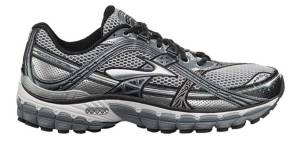
The Brooks Trance 10 is one of Brooks most technical and supportive running shoes. It features all the bells and whistles of any model in their support category. The key features that make this shoe so unbelievably popular are its fit, ride and support. Brooks DNA is a gel like material that works for all weight and feet types. Brooks DNA is in the entire shoe from heel to toe making it extremely comfortable and giving you an easy going ride.

If you have ever experienced the tongue of your shoe shifting during a run, then problem solved. The Brooks Trance 10 running shoes feature a new type of lacing which stops the tongue shifting mid run. The mid sole of the shoe has in Brooks’s terms, a progressive diagonal roll bar which tends to be lighter and softer EVA than in previous models. The roll bar is engineered to control the overpronation of the foot by providing you with maximum stability.

This shoe is perfect for those who are after support and need a neutral to moderate overpronating shoe, which are basically those who are slightly flat footed. For the ultimate experience in stability and comfort, there is no better shoe than the Brooks Trance 10.

Sportsmart currently stocks both mens and womens Brooks Trance 10 running shoes. You can view them online or come into one of our stores to try a pair on for yourself and experience the comfort.

EXERCISING WHILE AT YOUR OFFICE

Most people tend to spend most of their day on a chair as part of their work. Therefore the abdominal muscles, back, arms and legs rarely get a workout during a typical working day. Many workplaces are now recognising the need to keep their staff healthy and active. Exercise increases energy levels, boosts morale and improves productivity. Some companies are even going to the extent of incorporating gyms with various types of fitness equipment into their offices. However, for those who do not have that luxury there are simple types of equipment that can be used at your workspace.

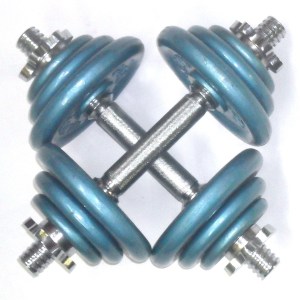
Dumbbells are considered to be one of the most useful and popular pieces of exercise equipment for the office. They are reasonably priced and vary in weight. Dumbbells are ideal for a short work out and weight training and can easily be placed under your desk or in a drawer. Ankle weights are small, weighted bags that are fitted above the ankle. They are adjustable and will fit many ankle sizes. Ankle weights are used to tone legs, strengthen calve muscles and improve balance. You can use them while sitting on your chair as they are not recommended to be worn while walking around.

Resistance bands are made of stretchable, synthetic materials. They come in different degrees of resistance and vary from light to heavy. A resistance band workout tones the muscles in your back, chest, arms and shoulders for overall strength conditioning.

An exercise ball is ideal for strengthening the core muscles in your back and abdomen. A ten minute exercise ball workout between meetings or on your lunch break can help with overall conditioning, stability and balance. It can be used for various exercises including back extensions, balance roll, hip extensions, ab roll, ball twist etc.

You can view our fitness products online or visit our stores to get expert advice from our fitness staff to select equipment suited to your work out needs.

SPEED TRAINING FOR SOCCER

If you play soccer, the key thing to remember is that speed in soccer is not only straight ahead. You must have the ability to accelerate quickly and run on diagonals and curves. A soccer player must be able to run fast as well as be able to anticipate their opponent’s next move and be able to react. Speed training for soccer players involves jogging, running, sprinting, and turning.

Dynamic strength training is key to a player’s speed training program. Soccer players who want to build functional muscle should stay away from body building programs. These programs may build visible muscle but will slow you down on the field. Dynamic strength training consists of full body movements i.e. you may perform a minute of high jumps, a minute of one legged hops across the field and 12 repetitions of a high pull. These must be performed without a rest

During a soccer match, players will run at different speeds. Therefore running 5km a day at a steady pace may end up hurting you rather than helping you. Soccer players will jog, sprint straight ahead, pedal backward, change direction, turn and kick the ball while running. A good training exercise is one where your coach will get the team to stand on the side line, he will then blow the whistle to signal different actions which the players must perform quickly. Ensure that you are given jogging time between sprints so that you do not become too tired too quickly.

Players must not only be able to move quickly on the field, they must also be able to do so with coordination. As a soccer player you must be able to control the ball, watch for your opponent’s next move and be able to steal the ball, make a pass or breakaway. Coordination drills can be performed using cones or hoops. Players should be able to sprint through obstacles as quickly as they can using different footwork and then receive the ball from another player. Your coach can also set up obstacle relays where the team is split in half and players race through the course toward the ball and try to score a goal. The aim is to beat your opponent.  The player who does not reach the ball becomes the defender.

TABLE TENNIS TECHNIQUES

Table tennis or ping pong is one of the fastest sports in the world. Table tennis strengthens your arm muscles and reflex skills and also improves your hand eye coordination. Playing table tennis for an hour burns almost 300 calories that is the equivalent to a 27 minute power walk on the treadmill.

To master the game of ping pong, you must be able to perform basic moves such as the perfect racquet grip, ping pong stroke and serve. Having the perfect grip is important because it controls the angle of the paddle which will determine your game. The stroke refers to the way you hit the ball. The serve is extremely important because it is the only stage in the game where you have total control of how and where you are going to place the ball. Your serve should ensure that the ball bounces on either side of the table.

The drive is a basic offensive table tennis technique which forces your opponent to make errors. The drive is a light top spin stroke that produces an upwards and forwards movement of the ball. The push is generally a defensive shot which is used to respond to the opponent’s low and close shots. The push incorporates a light backspin. This technique (if properly executed) enables the ball to be placed anywhere on the table where it is difficult for your opponent to attack.

If you are an advanced player, you can try out the loop. The loop incorporates top spin on the ball giving it a strong forward and upward motion. The loop drive is the primary attacking stroke used by serious players today. The chop is also a favoured defensive technique. This is where you hit the ball with extreme backspin and the chop causes the ball to bounce very low and move forward in a flat path. The advanced serve differs from the basic serve in that it has a degree of spin to it. The spin can be top, back or side. By changing up the angle of the paddle and point of contact with the ball a variety of techniques can be played. Therefore your opponent will be unable to predict your serve which will give you an advantage in the game.

RESPONSIBILITIES OF A TEAM CAPTAIN

A good team captain looks out for their fellow players before, during and after the game. If a player is not performing at their best or has a personal problem, a team captain will encourage that player to keep going. A good team captain will keep his team mates on the same level. When a team needs a leader, they will always turn to their captain. A captain’s responsibilities are met when the team is successful.

A team captain should strive to keep the teams morale high. They should organise social events for the team and motivate players by discussing goals and leading the team on game day. At the end of the season, the team leader should congratulate their team mates on their accomplishments.

As a team captain, you need to set an example for your teammates. You are a role model. Make sure you are always on time and have all the proper equipment on game day. You must set a high standard that your teammates can follow. The captain should not get into any trouble on and off the field. You should also attend all team functions and encourage your team to do the same.

If you want your team to succeed, practice is involved. At the start of your training sessions, the captain should lead their teammates in all exercise routines. The captain should motivate the team to push their strength to the limit in training and perform at their best in preparation for game day. As team captain, you should help your coach to keep your team focused.

WEIGHT BENCH EXERCISES

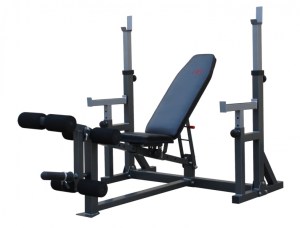
The weight bench is a standard piece of equipment involved in weight training. There are many exercises that can be done using a weight bench.

  • Chest

A weight bench is ideal for developing your chest. The best exercise for developing pectoral muscles is the bench press. For this exercise, you lay on your back and lift the barbell up and down. Dumbbell flys are also good for the chest. This exercise involves you lying on your back and grasping a dumbbell in each arm and then bringing them upward until they nearly meet over the chest.

  • Arms

A weight bench with a seat which can be inclined is perfect for developing your arms using seated dumbbell curls. Bend the weight bench at an angle and lean back against it while gripping a dumbbell in each arm and curling the arm upward. To use the weight bench to work out the back of your arm, do a bench tricep extension. This involves you lying on your back with a barbell held behind your head and then bringing it forward to rest directly over your head before returning to the starting position.

  • Neck

By adding a neck harness your weight bench can be used to exercise your neck. Perform neck flexions using a harness that is strapped completely around the skull and to which a weight is attached. Lay down on the bench with your shoulders at the end of the bench so that your neck hangs off. Use the muscles of the neck to bring the weight up and slowly back.

  • Abdominals

The weight bench can be used to work your abs and create a six pack and you don’t even need to use weights. The weight bench is an excellent way to exercise your abs if you have trouble with normal sit ups and crunches. Basically sit on the edge of the bench and lean back. Make sure to support yourself by holding on to the bench edges on either side. Stretch your legs out in front of you and then pull them back so that your knees are bent, then return to the starting position.

Sportsmart stocks a variety of weight benches to suit your workout needs. You can view our weight benches online or come into our stores to try them out and get expert advice from our fitness staff on choosing a weight bench that is suited to your exercise needs.