BASKETBALL TRAINING FOR KIDS

Anyone can learn to play basketball; children however can greatly increase their skills by beginning to learn the game from an early age. Basketball is a fun and competitive game, it is important to teach children the fundamentals of the game as well as the importance of sportsmanship.

Teaching kids to play fair and have fun is an important step in training them to play basketball. While the point of the game is to win, that doesn’t mean that anyone should feel bad about themselves. Kids should feel good about playing, about their team and about their skills whether they win or lose. Basketball involves teamwork, children should learn to work together on the court.

When kids are beginning to play, they need to repeat drills to become better. Kids love to learn new skills so start with the fundamentals. Have them dribble down the line first with their right hand, then their left. Once this is mastered they can practice switching hands. Have kids pass the ball back and forth, first while standing still and later while dribbling.

Have kids shoot from different spots and from different distances. The more they practice, the more they will understand. The can learn to use the backboard too. Once they are fairly good at making baskets, have them dribble and then shoot. Teach them how to perform layups.
10 REASONS TO ADD A BOXING CLASS TO YOUR FITNESS ROUTINE

Boxing classes have been offered by gyms for sometime now and many people find that they look and feel great after participating in this workout on a regular basis. Your arms and legs become stronger and more defined and your body becomes much more lean.

The top ten reasons why you should join a fitness class are:

  1. Gain confidence – as you get more fit and stronger your confidence will increase.
  2. Learn self defence techniques – some boxing classes teach you self defence moves and techniques you can use in case of an emergency.
  3. Get competitive – Go to a boxing class with a friend, set goals and keep each other motivated.
  4. Meet new people – as you get to know people in your boxing class, you will enjoy it more.
  5. Lose weight – burn heaps of calories
  6. Get toned arms, legs and body – punches and kicks will help you tone up.
  7. Get more energy as your fitness levels increase – heart pumping exercises will increase your fitness levels and overall health.
  8. Improve mental focus – as your punches and kicks become more accurate, your mental focus will become sharper.
  9. Emotional benefits – channel your negative emotions in a positive way.
  10. Get increased flexibility and quicker reflexes – as long as you are stretching and doing your warm up and warm down routine then your body will become more lithe and flexible.

HOW TO COACH A WICKET KEEPER

The wicket keeper in cricket is one of the most important players in the game. One team member is designated to fit the role and he can be the difference between the team achieving and winning or a loss or draw. This article will briefly guide you in training your team’s wicket keeper.

Start with a warm up. Some simple exercise drills that target the legs, ankles and knees should do the trick. This is important for the wicket keeper as he will often be forced into sudden bursts of activity from a static position and injuries can easily occur.

Do exercise drills involving foot speed. Skipping, ladder and hurdle drills will help increase foot speed and coordination. This will ultimately help when it comes to footwork technique.

Practice on stance technique. Do individual or team bowling practice with the wicket keeper in the proper stance (on the balls of the feet, leaning forward slightly in a crouched position, head motionless and always following the ball, hands together and fingers spread out).

Practice the proper footwork involved. First practice while telling the wicket keeper where the ball is going to be bowled. Then practice without notifying of its direction and let the wicket keeper use his own judgement of its flight.

Practice hand eye coordination and reflexes. This can be best achieved by simulating match conditions. Have the wicket keeper practice by standing behind a wicket with a real bowler and a batsman in between.

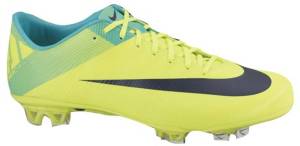
REVIEW – NIKE VAPOR SUPERFLY III FOOTBALL BOOTS

The Nike Vapor Superfly III football boots feature a new lightning heel graphic to increase visibility when a split second decision needs to be made. The pressure activated Nike sense technology adjusts stud length according to the surface you are playing on for enhanced traction.

The innovative flywire technology offers an ultra light and dynamic fit that adjusts to the individual shape of your foot. The dual density heel studs help deliver you with the rock solid stability you need during the game. The Nike Vapor traction system allows for effortless cutting and instant acceleration.

For instant bursts of speed, the boot also has toe-off traction in the forefoot. Nike worked closely with athletes including Cristiano Ronaldo and Zlatan Ibrahimovic throughout the design process to create a boot that enables toe off acceleration and minimises slippage in game changing situations.

The Nike Mercurial Vapor Superfly III football boots are now available at Sportsmart. You can view the Nike Vapor Superfly III football boots online or visit our stores to try a pair on for yourself.

HOW TO BE A GOOD STRIKER

This guide will briefly give you tips on how to become a good striker for your soccer team. The striker of a soccer team will play up front and is responsible for the majority of goal scoring. There is a huge responsibility often put on strikers.

It is important to learn the touch. Even the best players in the world work on their touch consistently. Your touch is your feel for the ball and your ability to control it quickly first touch. To begin working on other areas of your game, you need to have a great first touch. Individually, kicking repeatedly against a wall and controlling it is extremely effective.

A striker always needs to be on their toes. As a striker it is critical to keep moving in different directions. You must annoy and confuse defenders. You will always have the edge if you are constantly moving. Don’t make yourself easy to mark as it will give you less time on the ball. The number one rule is to not run straight, but always curl your runs.

A striker’s number one skill is shooting. Practice against a wall if you are by yourself by standing about 5 meters away, hit the ball slightly with the outside of your foot, just slightly off the instep. After this, move 15 metres back and start to drive the ball. You want to hit it so it just hovers a bit off the ground with maximum power and accuracy.

If you think you have mastered this, try it after turning on the ball and after receiving it first touch, then try shooting. Heading is different altogether. Get someone to cross the ball to you and don’t be afraid just let it hit your head. Look closely at the ball and put your head and body behind it.

Finishing well is also important, in situations where you have just the keeper to beat or finish a fine passing build up you need to have a quick mind and a calm head. Too many strikers try to smash the ball in where you are more likely to score by slotting it or placing the ball in the net. The only way to practice this is by putting yourself in these situations. Get as much game practice as you can.

HOW TO TRAIN GOALKEEPERS

While most players on a soccer field receive similar training, the goalkeeper is the only one that needs specific training to harness their skills. Training your keeper with the basics will help ensure that they understand their responsibilities and know how to protect the goals in the best way possible.

Begin by working with the keeper’s feet. When the keeper stands correctly they can move around to stop the ball. Feet should be shoulder width apart and have their knees slightly bent facing the ball. The keeper should not move unless it is necessary.

Teach the keeper where to stand. The keeper should always be about three feet in front of the goal line. Additionally, teach the keeper to guard the post nearest to the attacking player without moving too far from the farthest post. This allows them to get close to the post quickly – where the player is most likely to kick the ball.

Train the keeper to keep their hands in front of them at about chest level. Hands should be about a soccer ball’s width apart. Shoulders should be back and squared. When you combine this with feet at shoulder’s width apart and bent knees, this is the ready position. It gives the keeper the best chance of moving, catching or stopping the ball.

Tell the keeper to watch the ball and the attacker’s body language, but never the attacker directly. The keeper should look for two things: the path of the ball and any feet, hand and eye movement of the attacker that will clue him in to where the attacker might strike.

The keeper must memorise and recognise field formations. Once they have stopped the ball they need to get it to their teammates. The best way to do this is to know where to put the ball so someone on their team can get it easily.

TRADE WEEK….LOVE IT!

The winner of  the Sportsmart AFL sponsorship program, Michael Shmerling, provides regular blog articles on his favourite topic – football …

Ahh the merry-go-round of the AFL season is finally here, and I gotta say that I love it! The season is done and dusted, the cats are the champions with the pies looking forward to reclaiming there title in season 2012. Dane Swan is the Brownlow medallist and GWS is even closer to entering the competition. But now comes the fun stuff.

Trade week is that best week in the football calender, no player is safe as each club looks to strengthen their list with players from rival teams they believe can win them a premiership. Who will go, who will give in to the GWS cashola?

Names of those seeking a new club are;

Tony Armstrong, Jack Gunston, Setanta O’Hailpin, Paul Bowyer, Alan Toovey, Ricky Dyson, Henry Slattery, Jonathon Griffin, Xavier Ellis, Matthew Warnock, Matthew Bate, Luke McGuiene, St Kilda FC (too many players linked to quote) Paul Bevan, Josh Hill, Brad Ebert.

They are just to name a few, with St Kilda being the only club with links to 50million of there players wanted out/out of contract/salary cap problems.

So what does your club need and want? The Herald Sun believes that every club needs more midfielders. I’m gonna leave this question right up to you, the bloggers of Sportsmart. Sometimes the best judge of a club are its fans, we are the ones that will be the harsh judges on our teams performance and the players involved. So I pose this to all bloggers and readers, post your thoughts on trade week below in the comments box. I will in turn answer your thoughts. I do have my insiders and will try and deliever the stories as they happen to you.

Happy Trading!

HOW TO DRIBBLE CORRECTLY IN BASKETBALL

Dribbling is fundamental to basketball, all positions need to become efficient at it. It is also the easiest part of basketball to learn, but it requires a few basic instructions. Follow these simple steps to learn how to dribble a basketball.

  1. Dribble with your fingertips and the pads of your hands. Refrain from looking at the basketball while doing this. Keep your head up.
  2. Flex your wrists and spread your fingers. Push the basketball down lightly. Make sure your legs are bent but your back is straight to prepare you to move quickly.
  3. Pull your elbow close to your body and dribble the basketball away from your defender. Keep the ball close to the ground so it has less distance to travel. This will make it harder for the defence to steal it from you.
  4. Run quickly and dribble at the same time. Dribble the basketball in front of you about waist high, with your hand at a 45 degree angle to the ground. The faster you run, the further in front your basketball needs to be.
  5. Keep your body between yourself and the basket as you dribble. This allows you to protect the ball and keeps defenders away from it while you dribble.
  6. Alternate hands as you dribble. If you are right handed, you will dribble with your right hand a majority of the time. Dribbling with your left hand will throw your opponent off.

SKIP YOURSELF FIT

Skipping ropes aren’t just for kids, they can be a great addition to your workout routine. They can help you build balance, speed, agility, coordination all while you lose weight. Using a skipping rope for just ten minutes gives you an intense cardio workout. It burns calories quickly and if you do it regularly will increase your fitness levels. Many top athletes use skipping as part of their exercise regime, boxers in particular.

Skipping ropes are cheap. Sportsmart stocks a variety of skipping ropes ranging in price from $7 – $40 and features. Skipping ropes are probably the cheapest piece of exercise equipment you will buy.

You can skip anywhere whether it is outside or inside, it really doesn’t matter. The best surface for skipping is hardwood or very thin carpet, but really any hard surface will do. You could even do it in front of the TV.

Skipping burns lots of calories in a short amount of time. Just ten minutes of jumping burns about the same number of calories as if you went jogging for half an hour. If you are short on time, this is a great workout for you.

Skipping is also fun, you can set challenges for yourself i.e. see how many jumps you can do in a minute or how many in a row without messing up. To make sure you are jumping correctly, check that you are holding the handles with a firm grip and your elbows are close to your stride. Keep your torso relaxed and gaze straight ahead. This will help maintain your balance. When turning the rope, make small circles with your wrists. Make sure you’re not jumping too high, the rope should lightly skim the ground.

It might take a while to get into the swing of the skipping rope but the trick is to keep doing it in short bursts regularly to build up your endurance. Warm up before you start by jogging for five minutes. Then jump at your own pace, even five minutes of jumping a couple of times a week is a good start.

IMPROVE YOUR CRICKET FIELDING

When fielding during cricket there are many things to think about and consider. This article will look at a few essential cricket fielding tips which you can incorporate into your game to improve your fielding.

Wherever you are fielding you should always be on the balls of your feet so you can react and change direction quickly. If you are caught flat footed you’ll be slower off the mark and potentially give away more runs.

Try to anticipate where the ball will go; you can do this by carefully watching the batters shape and movements. This might be difficult at first but after a bit of practice it will become second nature and you’ll react much quicker to any shots coming your way.

When you are fielding close to the boundary and have to throw from the deep, try to aim your throw just above the keepers head and the ball should drop nicely in to his gloves.

When catching close to the wicket, such as in the slips, gulley or short leg make sure your stance is correct with your feet shoulder width apart or slightly wider. Spread your weight evenly across both feet, resting lightly on the balls of your feet, with your knees flexed. Keep your hands together, close to the ground with your fingers pointing down. Keep your head up with your eyes level and stay alert.

When catching the ball in the close, watch the ball all the way into your hands, allowing the ball to come to you, don’t try to snatch it. When catching the ball in the deep, try and catch the ball at eye level and cushion the ball into your chest.