TENNIS STRINGS

The winner of Sportsmart and Wilson’s tennis sponsorship program, Scott Lyons, provides regular blog articles on his favourite topic – tennis …

The strings that are on your racquet are vital to any player’s performance. After all, you hit the ball with your strings, not the frame of your actual racquet! Yet how do we know which strings to choose, and what tension to string them?

Tennis strings can be in the form of natural gut or synthetic, with each having pros and cons. Natural gut is said to have a “lively” feel and keep its tension for long periods of time. However, they are also expensive and not too durable. On the other hand, synthetic strings provide a cheaper alternative, are more durable, and come in different forms and designs, including pentagonal shaped strings, etc.

Now there is the case of what tension to string your racquet. In simple terms, a loosely strung racquet offers more power but less control, while a tightly strung racquet will provide less power but more control and spin, and is therefore suited to a stronger player who can generate their own pace.

A “thinner” string is also preferable to a thicker string in almost all areas other than durability. While a thinner string is more likely to break early, it offers increased spin, comfort and feel.

While some players break strings regularly and therefore restring their racquet every time they break a string, other players can be “flat” hitters and will therefore very rarely break a string. For these players it is important to still restring your racquet at least a couple of times a year. The reason is because the string will have worn down a fair amount and may be less responsive to new strings. On top of this, the tension on the strings would have loosened a fair margin since your last restringing.

Luckily, if this makes absolutely no sense to you at all the tennis staff at Sportsmart know everything about strings, and will be more than happy to offer you expertise and advice! Sportsmart offers a great restringing service, with a great variety of strings to choose from and racquets restrung within 48 hours. Come down to our stores and have a look for yourself.
HOW TO MOTIVATE YOUNG ATHLETES

Most young athletes that try a new sport quickly become frustrated or discouraged when they cannot pick it up easily. Children need motivation even if they are naturally athletic. Coaches and parents play a key role in helping young athletes succeed.

As a coach it is important to build strong relationships with your athletes. Take the time to form individual bonds with each player/athlete on your team and get to know their strengths and weaknesses so that you can give them personalised feedback. Some athletes are able to pick up sports immediately whereas others may struggle with the sport. You can praise them in their efforts when they overcome their weaknesses. Young athletes want to know that they have the potential and that they are valued members of the team. By developing individual relationships and giving them constructive feedback, not only will they be more confident during the game but they will also have trust in you as a coach.

Avoid punishing your athletes or criticising them. This includes making an athlete run laps if they make mistakes or calling out an athlete’s fault in front of the rest of the team. The athlete may feel embarrassed of inadequate and therefore be less likely to continue practicing the sport. However, you shouldn’t ignore mistakes. Provide your athlete with instructions to help them improve their weaknesses and acknowledge when the athlete is working on improving themselves.

Encourage your team to watch the sport regularly and find a role model within the sport. This will give them a goal to work toward and help them realise what is possible if they are dedicated.

TRAINING FOR FINALS

The winner of  the Sportsmart AFL sponsorship program, Micheal Shmerling, provides regular blog articles on his favourite topic – football …

It’s that time of the year where finals are on the minds of coaches and players part of teams in that log jam we call the mid table. With only 6 rounds to go of the local football season remaining and 8 of the AFL season, training is just as important, if not most important at this time of the year as it would be during pre-season. You’re not training to begin a season, your training to maintain and improve your fitness and skills for the most important part of the year.

So many things need to be trained at this point, but none more important than execution and trust. The execution of your skills and the trust you have within your team and only then will finals glory become a reality.

In terms of your fitness and skills, things shouldn’t change from week to week; a more complex training method isn’t needed. Only a continued form of skills and game plans should be trained, and with football sometimes being a basic game, your basic skills of kicking, handballing, marking and all the above under pressure being worked on, training should stay basic and the same. Changing or implementing new game plans for different training functions will only confuse players and supporters alike. If your team is already guaranteed a place in September, then no improvement in terms of game plans needs to be changed, but only worked on to achieve the best out of the game plans in place at that time.

Good luck to all local and AFL teams for the rest of the season, the road to the finals begins now!

HOW TO HOLD A TABLE TENNIS PADDLE

Learning how to properly hold your table tennis paddle is essential if you intend on playing at your best in table tennis. Whether you are playing seriously or for fun the grip and way you hold your paddle will determine how you play the game.

To hold a table tennis paddle, firstly place the wood handle across your hand with your palm facing forward. Then clasp your pinky finger, ring finger and middle finger loosely around the handle of the paddle. Next, extend your index finger along the back side of the rubber paddle while maintaining a loose grip with your other fingers. You must then clasp your thumb around the side of your paddle opposite your index finger, meeting your other three fingers which are wrapped around the handle of the paddle.

Grip tightness refers to the amount of tightness in your grip of the table tennis paddle. Your grip depends on the type of shot you intend to play. A loose grip is used when you are trying to help reduce the effect of power or spin of an opponent’s shot. Holding your paddle slightly looser allows the paddle to move a little more backwards when contact is made. This will cause more of the spin to be absorbed by the paddle. A loose grip is also useful when you are attempting to play a gentle drop shot over the net. Having a loose grip allows you to hit softer.

You would use a firm grip when you want to impact your own spin on the ball. When you use a firm grip you usually want to get as much spin or speed out of your stroke as you can. Having a firm grip will also help when you are trying to loop, reloop or block the ball pace. There are two main times when you should change your grip and that is when you are serving and during a rally.

Sportsmart stocks a variety of table tennis paddles and other table tennis equipment. You can view our table tennis tables online of come into one of our stores to see our complete table tennis range.

HOW TO MOULD YOUR MOUTHGUARD

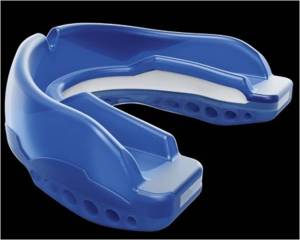
Using a mouthguard in contact sports is very important, especially for junior players. A properly fitted mouthguard is essential for you to be protected. The most popular types of mouthguard is the mouth formed or boil and bite which is heated and then formed to fit your mouth.

Moulding a mouthguard is made easy using our directions. Firstly, boil a small pot of water and submerge the mouthguard for about 20 to 30 seconds. Your mouthguard should have instructions for the correct amount of time. Remember, the mouthguard should be heated to the point that you are able to mould it not the point where it is beginning to melt.

Remove the mouthguard from the water using tongs as you do not want to deform the mouthguard by squeezing too tightly. Cool the mouthguard either by dipping it in cool water or allowing it to air dry. Check your mouthguard instructions to see if water is recommended. You only need to cool the mouthguard to the point where you can put it in your mouth without burning yourself.

Place the mouthguard in your mouth to mould it. Push the mouthguard against your teeth with your fingers and bite down lightly. Pull the guard tighter to your teeth by placing your tongue against the roof of your mouth and sucking the air and water out.

Now you need to cool the mouthguard. Some instructions say that the guard needs to cool rapidly after it has been fitted by dipping it in cold water. If the mouthguard does not fit properly, you can remould it by starting the process again.

Using a mouth formed mouthguard is the easiest way to ensure the mouthguard fits perfectly to your mouth. Be sure to inspect your mouthguard frequently and replace it if it becomes deformed or you notice that the edges become jagged.

Sportsmart stocks a variety of mouthguards for both seniors and juniors. You can view our range of mouthguards online or visit our stores to select the type that will suit your sporting needs.

TRAINING DRILLS FOR JUNIOR SOCCER

Junior soccer training drills help young players to develop the necessary skills which they can then take to the next level. There are many drills that soccer coaches can choose from. Junior players typically need to practice the basic skills of the game such as passing, dribbling, shooting and defending. Here are some training drills you can use with your junior soccer team.

Keep away

Keep away is one of the easiest and most effective drills for teaching players to make quick and smart passes. Coaches set up a small grid with cones, serving as boundaries in which the players stay in. Basically three players are in the grid and there is one defender. The attacking players must pass the ball amongst themselves while the defender attempts to take the ball or break up a pass. The attacking player that loses the ball then trades places with the defender and the game starts again.

Knockout

The knockout drill is ideal for developing dribbling and shielding skills. The entire team starts with the ball at their feet inside a defined playing area. The coach blows his whistle and the players start dribbling around the field. Players must navigate the area, keeping control of their own ball while trying to poke their teammate’s balls away. Players that lose their balls are eliminated and the last player controlling their ball is the winner. This drill is also helpful with teaching young players to keep their eyes up while dribbling and how to shield the ball.

One on one breakaway

The one on one breakaway develops junior attacking and defending skills. The coach splits the team in two, separating players into one group of attackers and one group of defenders plus a goalie. The defenders will get in line behind the goal with the coach and the attackers will form a single file line at the midfield. The coach rolls or tosses the ball out to the first attacker in line. At this point the first defender in line will run out and play defence. The attacker must control the ball and dribble in one on one against the defender before shooting a goal. Players then retrieve the ball and switch places after the breakaway is over.

REVIEW: NIKE LUNARGLIDE + 3 RUNNING SHOE

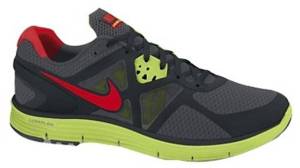
The Nike LunarGlide+ 3 running shoe features springy cushioning and enhanced support so that when you run your feet are extremely comfortable. The LunarGlide’s are an improvement in that they have an enhanced fit, extra support and breathability.

If you are a mild to moderate overpronator than these running shoes are perfect for you. The arch support wraps around your feet for a snug and secure fit. The cushioning (that great, its worth mentioning again) is so soft that the ride feels extremely natural.

The minimalistic upper of the Nike LunarGlide+ 3 features a mesh inner sleeve for lightweight breathability and support. For even more support, the running shoes feature a midfoot strap to connect the laces.

To moderate excess pronation, the Nike LunarGlide+ 3 running shoes have a floating heel support clip that helps keep the back of your foot from rolling inward or outward upon landing.

If you’re looking for a running shoe that not only looks great but gives you a comfortable and smooth ride while supporting your feet then look no further than the Nike LunarGlide+ 3 running shoes. Sportsmart currently stocks these shoes in our latest range of footwear Performance Lifestyle. You can view the Nike LunarGlide+ 3 running shoes online, or visit our stores to experience the Nike LunarGlide+ 3 running shoes for yourself.


HOW TO PLAY DEFENCE IN BASKETBALL

Many, if not all coaches will say that a great defence is the key to winning a game due primarily to the fact that it prevents the other team from scoring. Basketball defence isn’t just about being fast and having good skills, it takes a lot of effort to study your opponent. At any level of play, from junior to senior defence must be a top priority.

Studying your opponent is not an easy task. You must watch your opponent and understand the type of game they play, the moves they make and the way they approach the ball. If you can get an idea of the way your opponent plays, you will be able to outsmart them. Some key questions to ask yourself when studying your opponent include:

  • What are your opponent’s favourite shots?
  • Is your opponent right handed or left handed?
  • Does your opponent cut to the basket a lot?
  • Will your team need to double team your opponent?

Your defensive stance is essential to a great defence. A good defensive stance allows your body to be ready to react in any direction. You should keep your knees bent and your feet shoulder width apart from each other. One foot should be a bit ahead of the other.

Don’t try to reach in and steal the ball if you have not yet perfected your defence. You are at risk of fouling your opponent, also you can fall for a ball fake which will put you off balance and force your teammates to cover your player. You can slightly raise your arms in a position where you can easily steal the ball if your opponent fumbles.

One of the smartest ways to out play your opponent is to force them to dribble with their weak hand. For example, if your opponent is right handed, put your left foot forward and close in aggressively so that you can pressure them to change hands quickly or direction.

Deciding on the amount of space to leave your opponent is important and something many players do incorrectly. Space depends on the situation. For example, if your opponent is a skilful dribbler, give them a full step or two so that it is harder for them to go around you. If your opponent is a good shot from outside the key you must play up close and force them to get rid of the ball rather than shoot.

HOW TO TAKE CARE OF YOUR TREADMILL

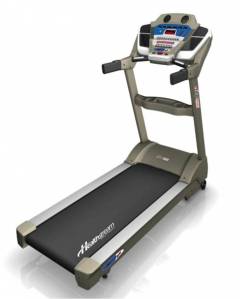
After putting in so much time and effort to try out, pick and assemble your treadmill you now have to make sure that you take excellent care of it to ensure that you get the most use out it. It isn’t extremely hard work but it is worth it to ensure that a year from now you are not going through the same process of having to replace your fitness equipment. This guide will teach you how to look after your treadmill and give you all the information you need to keep it in great shape.

The first important tip we can give you is to purchase a mat to go underneath your treadmill. A treadmill mat isn’t primarily used to protect your floor; it is used to protect your treadmill. A treadmill’s motor gathers static charge when you use it. The charge will then suck dust, lint and debris into your motor which will cause it to clog. The more gunk in your motor, the worse it will run and its lifespan will decrease. You can purchase mat’s and flooring for fitness equipment from Sportsmart. Simply ask our fitness staff and they can guide you in picking something that will protect your treadmill.

Make sure to clean and dust your treadmill every other week. Take care with the belt area as the build up of dust and gunk needs to be cleaned straight away. Also, remember to keep your power cord away from the base of the treadmill and incline mechanism. Many cords tend to be replaced for those reasons.

One of the main problems with most treadmills is in the control board. A treadmill’s control board is much like a computer in that it is subject to surges. The best way to protect your treadmill’s control board is to unplug the treadmill when you are not using it.

If you’re unsure about how to take care of your treadmill, our fitness experts are able to help you after you make your purchase and guide you on how to take the best care so that your treadmill lasts you for years to come.

THE RIGHT EQUIPMENT FOR THE RIGHT PRICE!

The winner of  the Sportsmart AFL sponsorship program, Michael Shmerling, provides regular blog articles on his favourite topic – football …

It’s the halfway point of the football season and whether you play Aussie rules or soccer, performance can be determined by how good or bad your equipment is and how you’re using it. Football boots, skins, shorts, playing tops, mouthguards, helmets and gloves just to name a few of the basics. But as kids grow older or as the season reaches its mid way point, sometimes an upgrade is on the cards as the old can’t live up to the standard it has to anymore. So here are my tips for an affordable equipment upgrade for the average footballer.

The Nike CTR360 Maestri II football boot is more than comfortable, it is light and has the proven ability to control ball movement and passing. So in technical terms it features a kanga-lite synthetic leather and a full carbon fibre composite chassis making the Maestri Elite an innovative boot that delivers maximum ball control and optimal passing pace. This boot delivers all of these great features in a super light package. A great boot for all ages and available from Sportsmart for an incredible $239. That might seem pricey for some people so become a Smart Card member and receive a nice discount.

Now onto mouthguards, apart from the right boots mouthguards are the most important piece of the football puzzle. Now aside from spending hundreds on a dentist made mouthguard, a nicely fitted mouthguard is what has parents sleeping well at night. I recommend The Shock Doctor Ultra STC Mouthguard. This mouthguard features a gel-fit liner that custom moulds to teeth for a tight and comfortable fit. The shock transfer core directs impact away from the vulnerable front teeth to the stronger triple-rooted molars to shield the teeth.

The mora performance enhancement, when fitted and worn correctly positions the lower jaw down and forward and the tongue up onto the roof of the mouth to increase strength and performance. A very smart and safe mouthguard available from Sportsmart for a bargain at $59.95 for adults and kids. Again join the Smart Card program and receive a handsome discount.

Now all socks and shorts are dependant on team colours, so stop by Sportsmart to check out their range. Compression shorts and tops come in different sizes with my recommendation being Under Armor. I own 4 pieces of Under Armor and it has by far exceeded my expectations. Great choice at a great price from Sportsmart.

I hope I was able to help guide you as to what is important for your sporting equipment needs. Good luck and I hope these tips help you kick some goals!