REVIEW: VOLKL POWER BRIDGE 1 TENNIS RACQUET

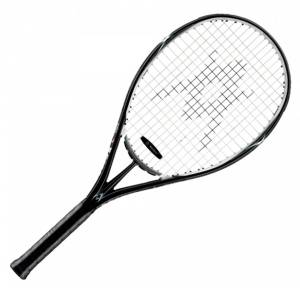
The Volkl Power Bridge 1 tennis racquet is Volkl’s most powerful racquet, the DNX 1 Power Arm has been updated to include Power Bridge technology for even more power. This racquet is not only powerful it also provides players with a solid feel and comfortable response.

The Power Bridge construction is specifically designed to increase the stability of the yoke area of the racquet to increase power. Power Arm technology is used so the throat of the racquet is attached to the frame just above the handle and moves independently from the head of the racquet.

Right at the moment the ball changes direction, the Power Arm recoils which then leads to extreme acceleration on the ball. This racquet will definitely bring the heat on the court. With an extremely generous sweet spot, only a short and compact swing is required to hit with consistent depth and a controlled pace.

The composite material that makes up the racquet is much more solid than what can be found on a number of competing models. The Volkl Powerbridge 1 tennis racquet is suited for the player looking for power as well as comfort. It is ideal for the player looking to take their game to the next level.

The Volkl Powerbridge 1 tennis racquet is available at Sportsmart, you can view the Volkl Powerbridge 1 tennis racquet online or visit our stores to try the racquet out for yourself.
HOW TO TRAIN A SOCCER DEFENDER

Conditioning, training and skills development provide the basic groundwork for successful participation at all levels of soccer. Training players on specific positions, including defensive positions such as sweeper and outside fullback provides them with the skills necessary to grow into a position and excel.

Start by building endurance and speed. Use training methods such as sprints and timed distance running to help defenders reach their fitness potential. Speed helps a defender attack while endurance enables a defender to have enough energy to last the game and match the intensity of attacking players.

Teach agility. Agility training allows defenders to develop and improve skills such as the ability to move side to side and the ability to make quick turns. Develop defenders agility by using training cones. Lay ten cones in a zig zag pattern. Ask players to sprint to the first cone, bend down and touch it then sprint backwards to the next cone and bend and touch it. Proceed until the defender touches all cones.

Teach the basics of defence. Instruct defenders to keep their body in between the goal and the ball at all times.This limits the offensive players view of the goal and decreases the chance of the player getting an accurate shot on goal. Advise defenders to clear the ball to the outside. Instruct players to refrain from lunging at the ball. Lunging throws defenders off balance. Defenders should stay focused on the ball itself, not the opposing player.

Encourage teamwork. Defenders must learn to rely on their goalkeeper and fellow teammates for assistance when necessary. Keepers often provide instruction about oncoming attacks and can help lead defenders to proper defensive positions should a breakaway occur. Set up practice scenarios, including specific defensive positions for kicks and penalties to encourage communication and trust.

HOW TO JUMP SERVE IN VOLLEYBALL

The jump serve is relatively new in volleyball. Players who jump serve effectively give their team an offensive boost. Players who can jump serve effectively give their team an offensive boost. Rather than beginning the game on the defensive with a typical serve, the jump serve starts the team offensively by forcing the opposing team to respond to an attack.

Stand two feet or more behind the baseline and hold the volleyball at arm’s length in front of you. Toss it high into the air above and into the court – the distance into the court and toss should depend on your jumping ability. The farther you can jump, the farther into the court you can toss the ball and the more power you will be able to generate. Make sure to toss the ball high enough to give yourself time to jump and swing. A low toss will end up being served into the net.

Move with the ball’s toss. As the ball climbs and hits its peak, you should be taking two or three steps toward it. Remember to avoid stepping into the court during serve. Jump as the ball begins to descend. Make sure you jump just before reaching the baseline. Your goal is to make contact with the ball at the highest point you can reach.

Swing and snap your wrist, just as you would for a spike. Your forward momentum and swing should carry the ball just over the net and quickly down. Practice repeatedly to get to the point where you know where you should stand before serving, how high you should throw the ball and when you should jump to attack.

Check out our volleyball range online or visit your local store to see the range in person.

HOW TO IMPROVE TEAM REBOUNDING IN BASKETBALL

Many basketball coaches will agree that rebounding is crucial in every game of basketball. If you are only giving the other team one shot per trip down the court, you have a higher probability of winning. There are a lot of aspects of rebounding, but holding off the opponent with a strong box out is one of the most important. This article will focus on how a team can improve their box out duration which will then lead to less rebounds by the opponent.

Start with two players standing in the lane. One player is on offence and the other on defence. The coach has the ball and is acting as a member of the offensive team when they shoot. The defensive player is between the offensive player and the basket while standing in the lane.

The coach shoots the ball, be sure that the defensive player yells ‘shot, box’. In game situations this alerts teammates that the opponent has taken a shot and everyone must box out.

The defensive player boxes out the offensive player by making contact with a hand or forearm, putting a hip into the player, pivoting to get the back side in contact with the player and getting wide while maintaining contact to keep the player away from the basket.

As the ball is in the air towards the basket, the player must keep contact and not give up any ground to the offensive player. If possible, the player should create more space by moving the offensive player further away from the basket.

The ball will bound off the rim or backboard. At this time, the player should maintain his or her box out position by moving the offensive player further away from the basket.

Once the ball bounces off the floor, the player can release from the box out and secure the ball. This extra time of holding the box out will provide training for holding that will bring better results in the game.

The defensive player stays on until he/she secures three rebounds in a row. Add one more offensive and one more defensive player to make it a 2 on 2 drill. This will emphasise the need for each player to do their part, if one player loses their box out it hurts the whole team.

Keep on adding an offensive and defensive player until you have a 5 on 5 game like situation. The coach continues to be the shooter, so the drill focuses squarely on boxing out.

HOW TO DO A TOPSPIN SERVE IN TENNIS

The topspin serve is an advanced technique you should add to your tennis game once you have experience. More advanced players typically use a topspin serve as a second serve creating an unexpected bounce which is difficult for your opponent to return.

Grip your tennis racquet similar to your backhand grip. Rotate your hand counter clockwise 90 degrees from your standard grip. This grip helps you generate greater spin on the ball. Toss the ball at the noon position, above or even behind your head slightly to the left. If the ball were to land, it would hit you on the top of your forehead. A high well placed toss allows you to maximise the topspin on your ball.

Arch your back more than usual as you toss the ball. Make sure your body faces slightly sideways to the court. Your swing path should flow sideways, parallel to the baseline rather than toward the net.

Swing your racquet so its head hits up and over the back of the ball. Push your racquet through the ball. This technique creates the spin, which causes your tennis ball to loop higher over the net and then dip down into the court. After it bounces, the topspin kicks the ball high and to the left. Continue to work on your form and accuracy to master this serve.

VOLLEYBALL REACTION DRILLS

Volleyball requires a wide range of skills and while players can fill specific roles, it is important for players to develop versatility that allows them to fill any role during a rally if needed. Throughout the game it is important for players to react quickly which requires practice. The following drills can be used to help volleyball players react quickly during matches.

4 by 2 pepper: Pepper is a two player game where the players take turns hitting the ball with a series of different strikes. To start, the first player hits the ball overhand to the second player, who in turn digs the ball to themselves and performs an overhand tomahawk. The same player then punches with their left hand, then their right, sets themselves and returns to the starting player with an overhand hit. The second player repeats the process until one player misplays the ball. Players react quickly to the ball to ensure they are in position for each hit.

Eye check: In eye check, three players participate with the setter having the most difficult job. A thrower sets up in the back row with a setter and a spiker in the front row. The thrower tosses the ball forward, simulating a dig and as he does so a coach on the other side of the net holds up a signal from the game ‘rock, paper, scissors’ over his head. The setter looks through the net, calls out the signal and sets the hitter for a spike. Drilling teaches the setter how to look across the net, which in a game allows her to find weaknesses in the defence and then react.

Net save: The net save is a simple drill to convert into competition, it is also quite fun. Each team has a hitter set off to one side and a setter in position to feed the balls to him. The remaining players line up along the net rear the other sideline. Coaches on each side of the net throw balls off the net. The front player in line must react to the way the ball plays off the net and dig the ball off the net to the setter who must play the ball where the hitter could go for the kill, though the hitter does not actually hit. Every successful set earns a point.

Rapid set drill: The rapid set drill is a three player drill that allows the active player to practice her reception of balls that come over the net from the other team. Two players stand on one side, with a player in a setting position and the other in a back position. The third player stands on the opposite side of the net. The third player throws balls across the net near the player in the back, but not directly at her forcing her to reach to one side to play them. The receiving player aims her hit to the setting position player who sends the balls under the net back to the player throwing the balls. A new ball is thrown as soon as the receiving player passes meaning she must react quickly to adjust for the new ball.

REVIEW: ASICS GEL NOOSA TRI 7 RACING SHOES

The Asics Gel Noosa Tri 7 racing shoes will definitely brighten up your run! This racing shoe uses the iconic Asics Tiger strip which is then combined with a wild multi colour midsole and glow in the dark heel counter to create a fun and vibrant experience.

Technically both the men’s and women’s models contain a new forefoot guidance line to enhance efficiency through gait. Also featured are tri tech like grip pads at the heel and tongue, open mesh weave to provide unsurpassed breathability and a perforated sockliner with sticky film will help prevent movement.

The speed laces will save you time in transition, by allowing you to put the shoe on quickly, easily and securely. Each new model in this series just keeps getting better!

The Asics Gel Noosa Tri 7 racing shoes are now available at Sportsmart in both men’s and women’s models. You can view the Asics Gel Noosa Tri 7 racing shoes online or visit our stores to try a pair on.

HOW TO GET THE MOST OUT OF YOUR SOFTBALL SWING

In softball, in order to improve you have to master the complex motion that is required to swing a bat. Working out is not enough, you have to sharpen your hand eye coordination. You have to learn to move and also keep your balance.

Grip the bat tightly with your strong hand (right hand if you swing right handed) above your lead hand. The bottom of your strong hand should be in contact with your lead hand, and all of your middle knuckles on both hands should line up across the grip. Gripping the bat at the bottom of the handle gives you more leverage.

Step into the batters box just far enough away from the plate where you can swing and hit a pitch on the outside corner of the strike zone. You may need to take a practice swing to see. If you do not have strike zone coverage the pitcher will easily get you out.

Set your feet just a little wider than shoulder width apart. Bend at the knees slightly so you can bounce up and down easily keeping balance. Raise the grip on your bat about chest height behind your head. Your hands and your elbows should make a triangle, with your elbows resting about waist height. Do not cock your elbow, it is likely to reduce the athleticism in your swing.

Get an eye on the pitcher and follow the ball. Breathe in and exhale slowly as the ball approaches the plate. Keep a loose grip on the bat to maximise bat speed; your hands will naturally tighten as they swing forward.

HOW TO WORKOUT USING AN EXERCISE BALL

Exercise balls are often used in physical therapy, exercise and during athletic training. When exercising using a ball, your body has to maintain balance and proper structure. The instability of the ball forces the body to work harder and engage more muscle. There are a variety of exercises that can be done using an exercise ball such as abs, legs and core workouts.

Start by warming up by stretching your muscles before you begin your exercise routine. This will help avoid injury to your body. Begin by stretching out your neck, shoulders, arms, legs and core.

Work out the upper body muscle groups such as triceps, biceps and shoulders. Push ups and planks are good for the upper body as well as the core. They firm up your upper body muscles while engaging your stomach. Begin with 8-10 reps for each exercise group.

Work out your lower body, including leg muscles, with the exercise ball. Lower body ball exercises to consider are ball squats, ball twisting lunges and bent knee bridges. Throughout the exercises balance is important in order to support the body and remain steady.

Exercise your abdominal muscles with the ball to help improve stability and strength. Exercises using the ball targets your abs while also engaging other body muscles. There are several exercises to consider for this area such as ball crunches, ball scissors and oblique curls.

Cool down after ball exercises to allow the body to relax. Complete another set of stretches to help return the heart beat to normal. Stretches should last about five to seven minutes.

Sportsmart has a variety of exercise balls to choose from, you can visit our stores to view our range and get expert advice from our fitness staff when selecting an exercise ball.

FIVE MINUTE BASKETBALL DRILLS

One way to keep your players motivated during a basketball practice is to constantly be doing something new. Running five minute basketball drills will allow you to change up the activity several times within an hour. Each five minute drill can focus on different disciplines of the game including offense, defence, conditioning and full game play. Map out the course of practice before you arrive.

Game simulation: Instruct players that you will be playing a scrimmage game. Break your team into two teams. Play five minute quarters where the clock runs continuously. Try to give everyone a go during the course of the game. In this game there are no foul shots only a change of possession if a foul occurs. Both the offense and defence can work on executing plays properly during this game.

Make five shots: Break your team into groups of three. One person is placed just outside the three point line. The other two players are placed on the block and at the top of the key. The player beyond the three point line takes a shot. The shooter immediately goes for the rebound, while the player at the top of the key takes the shooter’s former position and the person on the block takes the top of the key position. Whether a shot is made or missed the shooter immediately goes for the rebound, passes it to the player who is now at the top of the key, who then passes to the player who is in shooting position. The player immediately takes a shot. The purpose of this drill is to combine rebounding, accurate passing and shooting. The drill continues until five shots are made. You can move the shooter around to practice taking shots from various places.

Spin, move and shoot: Instruct the players to make a line at half court. Place a cone just inside the sideline directly to their right or left. Then place another cone on the elbow of the key on the same side of the court. On your whistle the first player in line dribbles toward the sideline; when they reach the cone they do a spin move and break towards the second cone, when they reach the second cone they jump and shoot. The player should get their own rebound and return to the line. This activity focuses on ball handling, speed and accurate shooting. When the player approaches the first cone, the next player can begin the drill. Repeat the drill as many times as possible within five minutes.

Heads up: It is extremely important that a basketball player is able to look down the court rather than at the floor when dribbling. This drill focuses on getting the player to keep their head up, while working on their dribbling skills. Split the players into pairs. Give each pair a basketball and each pair of players a ping pong ball. Space the players about five feet apart. On the sound of your whistle, players must dribble with one hand and pass the ping pong ball back and forth with the other. At the 2.5 minute mark, blow the whistle again and instruct players to dribble with their other hand. Continue until five minutes are up.