TIPS ON PUTTING TOGETHER A HOME GYM

Many people find it easier to stay in shape by having a home gym. The cost of building a home gym depends on how much money you want to spend and how elaborate you want your gym to be. With careful planning and creativity you can build the gym of your dreams.

Popular cardio machines include treadmills, elliptical machines, rowing machines, stair climbers and stationary bikes. You use cardio machines to burn fat and improve your cardiovascular ability. Treadmills are good for people who like running and walking while the others are good for people who prefer low impact exercise. If your home is small, consider a machine that folds to save space. There are treadmills and stair climbers available in this format.

Resistance training builds your muscles and can be done in several ways. Weight training machines are good but expensive and they require a lot of space. If you decide to buy one, pick a multistation system. You can also purchase dumbbells to strengthen muscles.

Some miscellaneous items should also be considered when creating a home gym. Consider buying a mat which you can stretch on. You might also be interested in a stability ball for abdominal work and floor based exercises. A heart rate monitor is also helpful to track your cardiovascular workouts.

You can view our large range of fitness products online or visit our stores to get expert advice from our fitness staff about putting together a home gym.

SPORTSMART SEPTEMBER CATALOGUE OUT NOW!

Our brand new September catalogue is out now and bigger than ever!

With 12 whole pages of savings you won’t want to miss out!

You’ll save across all categories including clothing, footwear, cricket, fitness plus much more!

If you’re a Smart Card member you will save even more! Members save $50 on the Puma Axis Trainer, 10% on batting gloves, batting pads, wicket keeping gloves and Skins plus plenty more!

You can view our latest catalogue online. Get into Sportsmart to save this September!


HOW TO IMPROVE REBOUNDING IN BASKETBALL

Rebounding is arguably the most important aspect of a successful basketball team. Good rebounding teams have a combination of good techniques along with a strong desire for the ball.

You must always assume that the ball has missed the basket. You can’t get the position you want if you wait to see if the shooter has missed. Always assume they will miss!

Block out your opponent. There are two effective ways to do this. The first is the frontal step. If the opponent guarding you tries for a rebound, step in front of them and make contact. Be sure to stay balanced and wide with your knees slightly bent and your legs apart.

The second fundamental of blocking is the reverse pivot. This is good to use when your back is to the hoop. When someone shoots, you spin or pivot on one foot. Let’s say you’re using your right foot as the pivot foot. As the shot goes up, pivot on your right foot and swing your left leg across your body so you now face the basket. This move allows you to cover a lot of space quickly.

Finally, grab the rebound. Make sure your feet are positioned so you have balance and jump up wide and strong. Extend your arms and reach for the ball with both hands. Get a good lock on the ball as soon as your fingertips make contact with it. Be careful not to bring the ball too close to your body as it will be much easier for defenders to knock the ball away from you.

GOALKEEPERS: DEFENDING THE GOALS

In soccer, the goal keeper is a designated player with the job of directly preventing the opposing team from scoring by defending the goal. If you’re looking to recruit a goal keeper for your team, remember the bigger the better! Bigger goal keepers can cover more ground in front of the net. It is also important that they are quick and nimble.

Traditional keepers stay close to the goal and don’t wander outside of the penalty area with or without the ball and wind up as part of the attack. Making saves isn’t just knocking the ball out of harms way. If a keeper can hold onto the ball the opposition has no way to score.

When the opposition is attacking, the keeper must be prepared to grab the ball out of the air. The keeper should be standing with their hands by their side and palms facing the ball and feet should be no wider than their shoulders.

Some common catchers goalkeepers will use are:

  • The diamond, or W catch: The goalkeeper catches the ball when the shot is wide or over the head of their body. It is vital to get as much of the body behind the ball as possible so that the ball can hit the body and the keeper can fall on it.
  • The chest catch: When the shot is right at the keeper, as the ball arrives the keeper should surround it with their arms, elbows must be close together to trap it against the chest.
  • The scoop catch: For a low shot or one that is rolling on the ground, the keeper should place their hands on the ground with their palms facing up.
  • The full extension dive: This is used when a shot is heading toward one of the corners of the net, the keeper has to extend himself to the fullest making their stride as long as possible with arms extended and away from the face to see the ball as clearly as possible.
  • The cross: Going up for crosses is all about timing and confidence. The purpose here is to stop the opposition from scoring a head shot, usually from a corner kick. To get the best possible jump, the goalkeeper should jump off one leg and lift the knee that is facing the play to add to their leap. The keeper should attempt a diamond catch while moving toward the ball.

SAM STOSUR

The winner of Sportsmart and Wilson’s tennis sponsorship program, Scott Lyons, provides regular blog articles on his favourite topic – tennis …

The US Open is done and dusted and I think there is only one player we are thinking about- Sam Stosur! What an unbelievable performance she gave to not only battle her way through the tournament, but to demolish thirteen time grand slam champion Serena Williams in the final!

Sam battled her way through many of her rounds throughout the Open, and had to draw on every bit of her mental and physical strength to get her through. While it may have been a weakness in the past, her mental strength was unbelievable for the entire tournament and was arguably the difference between her being eliminated in Round 3 and winning the tournament.

In the final, Sam came up against Serena Williams. Williams is tough to face at the best of times, but when Serena had been in such ominous form throughout the previous rounds, Sam knew she would have to play incredibly well to win. She did just that, and took it right up to Williams. In perhaps one of the few times in her entire career, Williams was simply out-powered, and thus out played. Making few errors, Sam stepped right in on the Williams second serve and hit punishing, deep balls right back at her. On her own serve she used heavy topspin to place the ball away from the Williams hitting zone, and therefore had her always reaching, which allowed Sam to stay on top of each point.

Sam has displayed tremendous class and sportsmanship right throughout the tournament, and throughout her career as a whole. She never lost her cool on court, praised her opponents and showed genuine humility. It is this reason why she is respected highly by the other competing players. Now, however, she will also be respected and known as a US Open Champion! Well done Sam!

HOW TO PASS IN BASKETBALL

Basketball is a fast paced game and the quickest way to move the ball is by passing. The pass is one of the most fundamental skills of the game because the well executed pass makes it possible for a player closer to the basket to shoot and score. Basketball players generally depend on three types of passes.

To pass take a step toward your receiver and release the basketball with a snap of your wrist in the chest pass. Shooting straight from the chest is the fastest way to get the ball to a teammate when the defence doesn’t stand between you.

A bounce pass on a fast break involves giving the ball a backspin for extra push as you aim for the ball to bounce at two thirds of the distance between you and the receiver. You’ll find the bounce pass is often used when throwing in bounds.

For an overhead pass, hold the ball over your head with two hands and aim slightly higher than your teammates head. Players tend to have more control of an overhead pass than a bounce pass.

DO’S AND DONT’S OF CRICKET BATS

DON’T leave your cricket bat in the hot boot of your car. This is one of the worst things you can, especially in the summer.

DON’T use your cricket bat against cheap cricket balls

DON’T expose your cricket bat to excessive moisture or rain. Always dry your bat immediately if it does get wet.

DON’T over oil your cricket bat. Less is best when it comes to oiling.

DON’T throw your bat around.

DO take care of your cricket bat.

DO prepare and run your cricket bat in correctly.

DO oil your cricket bat regularly (a very light coating once every few months)

DO store your cricket bat in a cool and dry location.

DO make runs with your cricket bat! 🙂

DON’T forget to check out The Cricket Sale this weekend to get some great deals on cricket gear!

HOW TO REPAIR A CRICKET BAT

To ensure that your cricket bat lasts for a long period of time it is important to take proper care. A decent cricket bat is not cheap and batsmen tend to become very attached to their bats. Repairs you can do yourself range from regular maintenance such as replacing the rubber handle to restoring the blade.

Regular maintenance tasks include:

Wind bat repair tape a few times around the blade where and when you notice surface cracking. Don’t use too much tape as this will deaden the feel of the bat. Act as soon as the cracks appear, especially those across the blade.

Replace the rubber handle whenever it wears or cracks. Roll the new grip on gently and tape it to the top of the blade with bat repair tape.

Wipe the bat with a dry cloth whenever it gets wet. Put it somewhere cool to dry out, but away from the heat. Excessive dryness will shorten the bat’s life. Apply one coat of oil when properly dry to keep the bat moist.

Post-season bat care:

Remove any anti-scuff sheet on the face of the bat at the end of the season. Treat the bat with a coat of raw linseed oil and apply another coat 24 hours later. Leave the bat for at least a week to let the oil sink into the willow and dry.

Apply a new anti-scuff sheet, sand and restore the entire blade. This gives the bat a near new finish. Sanding keeps the willow supple and allows it to breathe, extending the bat’s life and minimising the chances of cracking. Follow this with two good coats of raw linseed oil.

For further advice on taking care of your cricket bat, speak to our Bat n Ball staff at any our Sportsmart stores. Also, don’t forget to check out The Cricket Sale!

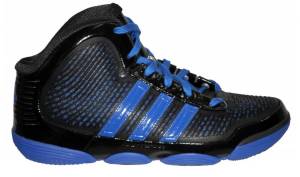
REVIEW: ADIDAS ADIPURE BASKETBALL SHOES

The adidas adiPure basketball shoe features an upper made of synthetic leather and SprintSkin monomesh that combine to decrease the weight of the shoe and increase breathability. The addition of PureMotion flexibility to the double last construction means you get the best of both worlds – flexibility and control.

When you first put the adidas adiPure basketball shoes on you will feel very low to the ground. Within just two or three runs the shoe will begin to flex more naturally. If support and protection are your top priorities for a basketball shoe you will find the adidas adiPure’s to be a good choice.

The adidas adiPure basketball shoes were created to fit anyone. Ideally, if you have wide feet you will get a better fit than most players. Featuring adiPRENE+ hidden in the double lasted midsole, you will find the adiPure’s provide you with excellent cushioning.

With excellent traction, the PureMotion configuration allows for your foot to find grip at much more extreme angles than your standard shoe.

All in all, the adiPure is a well rounded performer and a solid team shoe. If you have a hard time finding a shoe that is wide enough, the adidas adiPure basketball shoes are definitely worth a look. These basketball shoes are suitable for those who primarily play forward or centre.

The adidas adiPure basketball shoes are available at Sportsmart. You can view the adidas adiPure basketball shoes online or visit one of our stores to try out the shoes for yourself.

HOW TO STRETCH AFTER A RUN

Stretching is important after any exercise routine. Stretching after running can prevent muscles soreness and can improve flexibility.

It is important to warm down after your run. Follow the pace of your warm up, but in the opposite order. Do some static stretches to begin. Common static stretches include: the hamstring stretch, quadriceps stretch and the runners lunge.

For the quadriceps stretch, stand on your right foot and pull your left foot to your left buttock with your left hand. Repeat on the other side.

Lie down on your back. Lift your left leg. Place your arms around your thigh and gently pull your leg as close to a 90 degree angle as it will allow. Repeat on the other side.

Begin on your hands and knees then bring your left foot between your hands. Straighten your leg and gently move your buttocks towards your heels.

Hold your poses. It is not safe to stretch too quickly. Move into your stretches with control and restraint. Breathe deeply form beginning to end and hold each stretch for at least 30 seconds. Repeat each stretch at least 2-3 times.