HOW TO THROW A CURVE BALL IN SOFTBALL

Pitching in fast pitch softball is perhaps the most important factor in winning and losing games. A good softball pitcher can keep their team in any game even if the other team has better players. One of the keys to effective pitching is being able to throw a variety of pitches. The curveball is one of the most effective pitches in the game. Many softball hitters can attack a fast ball, but lack the confidence and ability to adjust to the curveball. As a result, they stress out whenever they see a curveball pitcher.

Start by learning the strategies for curveballs. The pitcher can start a curveball so it looks like it is coming right over the plate and then have it drop out of the strike zone just as it gets to the hitting zone. By that point the hitter has committed to hitting the ball and misses it. The other type of curveball is one of that looks like it is going to be out of the strike zone and then drops into it at the last instant. The result of this pitch is usually a called strike.

Grip the softball with your thumb running along the seams of the softball and your second and third fingers along the opposite seams. Do not squeeze the ball tightly with your fingers. In fact you should have a light grip with your index finger barely pressing down on the ball’s seams.

Do not snap your wrist when you let go of the softball. When you throw a fastball, your wrist snaps to provide additional power. For a curveball, let the ball roll off your finger tips. The pressure comes from your thumb and middle finger, while the spin that comes off the ball will make it curve.

Do not change the speed of your arm, nor the angle of your pitching arm when you are throwing the curve. The more you change those things, the greater the chance the batter has of realising you are about to throw a curveball. You don’t want to giveaway what is coming.

Learn the mechanics of the fastball before you try to learn to throw a curve ball. The fastball is the most important pitch in the game and a curveball will not be as effective unless the pitcher already has a good fastball.
WHAT’S ON AT SPORTSMART – GREATEST EVER BOXING DAY SALE!

SAVE UP TO 60% ACROSS ALL OF OUR STORES

Our sale kicks off on Boxing Day (doors open 9:00am) and ends 31st December.

Don’t miss out on our amazing bargains!

Save 25% – 50% off compression

Nike men’s Zoom Equalon+ 4 was $239 now $119 save $120

New Balance M1260RS 2E was $249 now $99 save $150

Wilson BLX Six One Tour tennis racquet now $135

Wilson BLX Six One 95 now $135

Save up to 66% off all ball sports

Save up to 50% off senior cricket bats

Enduro Endeavour treadmill was $2199 now $999

For our entire list of specials visit our website

HOW TO TEACH BASKETBALL FOUL SHOOTING

Foul shooting is one of the most important skills to teach a basketball player in order to improve their all around game. Many players are poor foul shooters because they are never taught the correct way to take a foul shot. A foul shot is a lot different than any other shot in basketball and it requires the most concentration. Here are some important steps you can take in order to teach basketball foul shooting to children and adults of all ages.

Position the player at the free throw line with their legs shoulder width apart. Place his/her right or left leg a few inches forward depending on what hand they use to shoot. Right handed shooters would place their right foot forward and left handed shooters would place their left foot forward.

Stand under the basket and pass the ball to the player at the free throw line using a bounce pass. This will help create a routine and mimic a live game. During the game, the player at the foul line will be given the ball by the referee from under the hoop.

Have the player take three dribbles with their shooting hand and spin the basketball. Encourage the player to use the same routine each time they step to the foul line.

Have the player bend his/her knees to a 45 degree angle and then follow through and release the basketball with his shooting hand pointing towards the hoop. Follow through is one of the most important parts of free throw shooting. Encourage the player to practice following through without the basketball to develop form.

Repeat this process until the player develops a rhythm. Rhythm is essential in foul shooting. Practice foul shooting as often as possible and make it a priority during practice.

Create a distracted and pressured environment during foul shots once they’ve got the hang of normal foul shooting. In game time situations, players will need to be able to make foul shots in front of loud crowds and during pressure situations. Consider rewarding the player or team for a certain amount of foul shots made during training and disciplining them for missed foul shots i.e. run a lap of the court.

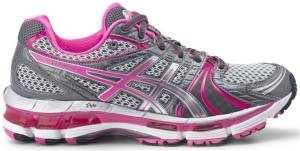
REVIEW – ASICS GEL KAYANO 18 RUNNING SHOES

The Asics Gel Kayano range is a favourite amongst runners who prefer a stable running shoe. The Gel Kayano 18 continues to hold steady as a leader in cushioning and support. The entire Gel Kayano range has earned a strong following and this 18th version has some fancy new updates that will not disappoint.

Featuring Asics renowned and exclusive Gel cushioning, the Asics Gel Kayano 18 will reward runners with familiar functions. This model is revamped with a reduction in weight and cosmetic updates, don’t worry too much this version is the Stability running shoe that you have grown to love!

The Asics Gel Kayano 18 is a bit softer and more flexible than previous Kayano models, you will enjoy smooth confidence through every step thanks to the larger Gel unit. You’ll experience even more comfort with unique gender specific technologies like men’s and women’s specific forefoot cushioning.

The slimmer Gel Kayano 18 design offers you a better connection to your run with ample shock absorption to round out the overall comfort and keep your foot closer to the road.

The Asics Gel Kayano 18 is now available at Sportsmart. You can view the Asics Gel Kayano 18 running shoes online or visit our stores.

HOW TO TEACH BASIC SOCCER SKILLS

As in most games, the key to teaching basic soccer games is to make the players learn the skill while having lots of fun. The basic soccer skills include dribbling, shooting, heading, tackling and goalkeeping. Focus on one skill at a time and move on to the next one after some practice. Don’t linger on one area for way to long or boredom will set in and players will start losing interest.

Teach the team about the role of players in each of the three positions: forward, midfield and fullback. Split the players into three groups and line them up one behind the other. Each group plays one position for a game and then the groups switch position. This way, each of them gets to play in every position.

Introduce dribbling. This is by far, the most important basic skill in soccer as dribbling is how the ball moves across the field while keeping it under control. Explain the importance of keeping the eyes on the ball, never letting the ball move more than a couple of feet away from the body, shielding the body between the ball and opponent players and always keeping an eye on the positions of other players.

Teach shooting, which is kicking the soccer ball over a long distance either into the opponents net or to another player of the same team. Demonstrate and let the players practice the basic shooting steps of keeping the eye on the ball, approaching at a slight angle, placing the non-striking foot on the side of the ball, maintaining the knee of the striking leg over the ball, making contact at the centre of the ball and following through.

Introduce the idea of heading but keep in mind that it can be tricky to teach and master. There are intricate details to the technique, start with the basic skill of making contact with the ball with the forehead, eyes open until contact.

Practice slide tackling, where the defender must stop an opponent player. Instruct and practice slide tackling only and leave block tackling to more experienced players.

Ensure that all players practice goalkeeping. At the basic level, focus on proper catching techniques and avoid teaching driving.

HOW TO CORRECTLY HIT A PUNCHING BAG

Hitting a punching bag can be a way to improve self-defence tactics, compliment an exercise routine or practice for a sport such as boxing or wrestling. Correctly hitting a punching bag will improve your physical fitness, but if your form is incorrect, hitting a punching bag can lead to injury. A heavy bag weighs between 40 to 100 lbs and hangs from the ceiling or a stand. It is important to learn the proper form before starting to work out using a punching bag.

Protect your hands by putting on boxing gloves. For additional support and protection, tape your knuckles and wrists before putting on gloves. Failing to wear gloves could easily result in injury. Warm up for 10 to 15 minutes before beginning your routine. Stretch for a few minutes and start to work up a sweat by jumping rope or running in place.

Practice the proper stance before hitting the bag. Stand on the balls of your feet; do not stand flat footed. Keep your knees bent so you are easily mobile and you have a lower centre of gravity. Keep your hands in front of your face with your fists clenched.

Hit the bag rather than push it. Many amateurs try to take a big swing to hit the bag hard. This results in poor form and low power. The power comes from your shoulder. The resting position for your right hand is by your right cheek. To properly throw a right hand punch, step toward the bag. Extend your arm while rotating your wrist so that your knuckles are facing the bag and punch from your shoulder by rotating your body toward the left. You will know if you punched the bag correctly if the bag ‘snaps’. If you use incorrect form and push the bag, the bag will swing and the chains will stay perfectly straight. Once you punch the bag, immediately bring your arm back to its resting position in front of your face.

Develop a routine using both hands. For right-handed people, punching with the left hand is awkward and takes much more practice to develop a powerful left-hand jab than a right hand jab. Remember to develop both arms equally so you do not have a weakness.

THE PHYSICAL BENEFITS OF PLAYING GOLF

A golfer is doing more than just playing a leisurely game while enjoying the outdoor surroundings. Golfers know the sport can provide an all-body workout, ranging from a solid cardiovascular workout to muscle strengthening and better balance.

The typical 18 hole golf course is about 8km. 8km can be used to strengthen one’s body core (arms , legs and shoulders) while also improving overall health operations. Golf uses the entire body. The more the golfer uses their body instead of relying on aids such as caddies and carts, the more health benefits are obtained. Golf movements consist of walking, swinging, squatting, bending and lifting.

As a form of physical exercise, golf can provide an individual with benefits ranging from improved circulation to improved flexibility. A good cardiovascular workout occurs when walking the entire course. Pain levels can be decreased by playing golf because the joints and muscles will be moving. Arthritis can be helped because golf loosens stiff joints.

Believe it or not, golfers experience better sleep. Golfers also improve their strength, mobility, hand-eye coordination and range of motion. Golf is also good for weight control.

The golf swing and stance play a major role in improving one’s posture, overall balance and muscular coordination. By having these health promoting factors, an individual experiences less pain and discomfort. Golf can be played at any age and families can all play together.

As in all types and levels of physical exercise, check with your medical provider to be certain golf is an appropriate activity for you to engage in. Also, if you are a beginner, start slowly and progressively increase the level of exercise obtained. This is to avoid potential injuries.

HOW TO SERVE IN TABLE TENNIS

Table tennis is growing in popularity around the world, with many players. Any sport takes practice and it is also good to know the moves and rules associated with the game. Serving is an important aspect of table tennis and can dictate whether you win or lose.

Place your feet at a 45 degree angle to the table and bend your knees slightly to position yourself to serve. Place the ball in the palm of your non-serving hand and bend forward slightly.

Your legs should be slightly more than shoulder width apart. Make sure your hand is higher than the table’s surface and behind the endline.

Hold the table tennis bat with your serving hand immediately behind the hand holding the ball. Keep your serving arm’s elbow bent at about 90 degrees.

Throw the ball at least 6 inches and hit it immediately with the bat. Make sure the table tennis table bounces once on your side of the net and once on theirs.

Some important tips:

  • Keep your wrist relaxed and loose to improve the spin on your table tennis serve.
  • Concentrate on setting up your next shot instead of acing your opponent.
  • You must keep the table tennis ball and racquet above the table’s surface at all times when attempting a serve.
  • Never let the ball touch the net on the way over to your opponent’s side of the table. If this happens, you’ll have to serve again.

HOW TO SET A SCREEN IN BASKETBALL

Winning basketball is always about team play. Players have to know how to dribble, pass and play defence. Players can’t be content with just being able to do two things well. Setting a screen so your teammate can have an unaffected look at the basket is one of the most under appreciated, yet vital skills in the game.

Run hard to the end of the free throw line and establish your position as you see your teammate running in that direction. They are anticipating receiving a pass. By holding your position, your are screening their defender from getting into a position to alter your teammates shot when they receive the ball.

Follow the flow of the game. Any shooter has a better chance of scoring when the defender can’t get near them. You are much better off providing a screen for a hot shooter than for one who has been struggling to score. Understand the angles that your teammate likes to take before shooting. Make sure you get in front of their defender a second or two before they attempt their shot. This may sound complicated but it should come naturally as long as you are paying attention to your teammates.

Set a solid screen down low for one of your bigger teammates. This is also effective, however space is limited. The best way to make this work is to have confidence that the passer will get the ball to your big players outside shoulder. You can screen their defender. As long as you can give your teammate a half second of freedom, they should have an easy chance. Since you will be blocking out a much bigger player, you will find it tougher but it will be worth it for the basket.

Fake setting the screen and roll to the basket for an open shot yourself. Basketball is not about doing one thing well. You have to be unpredictable. If you have set two consecutive screens your opposition will expect another. Instead of setting a screen, cut quickly to the hoop and look for the quick pass.