HOW TO HELP KIDS IMPROVE IN BASKETBALL

Helping a young person improve at basketball will take knowledge of the game, patience and the ability to teach. Basketball is a game that is made up of several fundamental movements that when put together form the basis for play. By teaching the basic fundamentals to young players, you will be equipping them with the skills necessary to be successful basketball players as they get older and play at higher levels.

Focus on their dribbling. This skill is necessary for unsuccessful players and must be improved to the point of mastery. Work on dribbling skills by having the player dribble in place with each hand. Make sure they are not looking at the ball and that they are using their fingertips to control the dribble.

Progress by having the player dribble while walking at a moderate pace. Have the player walk the long of the court while using their right hand and then back using their left hand. Instruct the player to move at full speed once they feel comfortable walking at a moderate pace. Full court dribbling is practiced at all levels of the game and will improve with repetition.

Drill the basic types of passes. This skill can not be overlooked as it is the part of the game that accomplished players excel at. Get players into pairs and practice throwing chest passes with both hands. Next, work on the bounce pass. The ball should start at the players chest and be thrown down the court at a sport that bounces it up and hits you in the chest. Work on the bounce pass until the player can hit their partner in the chest every time.

Work on shooting form and technique. Have the player stand about five feet from the front of the hoop. They must work in close shots before moving back to longer ones. Make sure the player is balanced, with both feet aligned with their shoulders. The shooting elbow must be tucked into their side, not sticking out. Their eyes should be on the rim, not the ball and the follow through should be up not out. Their hand should finish above the head on the follow through, not out in front of the face.

TIPS FOR INDOOR SOCCER GOALIES

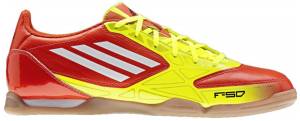
Playing indoor soccer is a lot of fun. Compared to outdoor soccer, which requires a certain amount of skill and experience, indoor soccer is more open to the recreational athlete looking to have a good time. There are generally give players on the indoor field, plus a goalie. Being an indoor soccer goalie is a very challenging position considering the large number of shots taken and the high score of most indoor soccer games. Playing goalie can also be a lot of fun as long as you keep a few things in mind.

Guard your goal with your life. The goal in indoor soccer is small and it often doesn’t pay to take too many risks that involve leaving the goal. If there is a breakaway and you need to come out a bit, make sure you extend your body fully by diving or leaping so that the net is never left open. Otherwise stay close to home.

Play the walls. Unlike the outdoor sport, in indoor soccer there are walls and the ball rarely goes out of bounds. A little bit like hockey, this can lead to ricochets where the offense ends up with an easy shot or a header right in front of the goal. Always keep in mind that a desperate or crafty offense will use the walls to their advantage in creating unlikely scoring opportunities. If you can play the ball off the wall, you have a good chance of blocking these opportunities before they develop.

It is important to direct your teammates. The indoor soccer arena is small enough that everyone can hear everyone else wherever they are on the field. As a goalie it’s your job to let your teammates know where to position themselves on the field in order to be most useful – especially the defensive players. Often players in the field will lose track of their location or players on the other team and it is the goalie’s responsibility to remind them of these facts.

HOW TO BREAK IN YOUR MITT QUICKLY

Baseball and softball gloves have an intoxicating leather smell when they are new. The problem is, when they are new they are stiff and hard to control. On the playing field, a glove should feel like an extension of your hand and a brand new glove does not fit the bill. Fortunately, there are a number of items that can help you break your mitt in quickly.

Wipe the glove with a damp cloth to remove any dirt or debris. Use a softening agent such as commercial glove oil, baby oil, vegetable oil, petroleum jelly or shaving cream. Apply it liberally to the pocket of the glove as well as to the webbing, thumb and finger areas on the inside of the glove. Wipe away any excess oil, jelly or cream with a clean cloth.

Place a ball inside the pocket as far down as possible. Use a baseball if you typically play baseball or a softball if you use the glove for softball.

Arrange the glove so that the thumb of the glove is positioned tightly over the ball. Fold the fingers of the glove over the outside of the thumb. Wrap the glove tightly with an elastic bandage, large rubber band or ribbon. Leave it in this position for at least 24 hours (longer, if possible). Repeat the above steps when the glove is not in use until it becomes flexible.

HOW TO SPIKE A VOLLEYBALL CORRECTLY

There are many different spikes in volleyball. Learning the basic spike will improve a player’s game and will lead to advanced techniques. The basic spike includes the approach, the jump and the hit. It will take practice to be able to spike the ball efficiently enough to lead to a kill. A kill occurs when the ball is spiked so hard that the other team does not have the opportunity to get the ball before it hits the ground. A ball that is spiked correctly will result in a kill most of the time.

Stand three to four feet from the volleyball net. Take a long stride and lift both arms in front of the body. A right handed player should start the stride with the left foot while a left handed player should start with the right foot.

Take two smaller steps and swing the arms backwards. Jump as high as possible and swing the arms forward for momentum. Bring the hands up with palms open. Pull one hand back behind the head while aiming the other hand at the ball. Keep the hands open and the palms facing outwards.

Push both hands forward and hit the ball starting with the heel of the hand and snapping the wrist forward. Remember to keep an eye on the ball the entire time to prevent missing it. Do not hit the net with any part of the body, this will be ruled as a fault.

TIPS FOR DEALING WITH BAD CALLS IN BASKETBALL

Good refereeing is the key to a fair contest in nearly any sporting event. A bad call has the potential to alter a game in favour of one team over the other. Bad calls eliminates fair play in the game, causing it to become more a game of chance. Basketball is particularly reliant on referees to call fouls. Dealing with a bad referee requires patience.

The referee should not be making calls maliciously and it is likely that he is unaware of his own bad performance. Do not point out the bad call in a rude way as this will not help your cause, mentioning your problem in a more general way can alert the referee to your concerns and give him/her things to watch out for. For example, if the referee is calling fouls unfairly against your team, ask them to watch the other team for drawing fouls. Talk to the other referees on the court as well to address bad calls if a specific ref is to blame.

A bad referee is more likely to penalise you for aggressive play in basketball since the game is not considered a contact sport. Give the other team a little more space when dealing with a bad referee to try to prevent unjust calls. Playing more conservatively for a little while may calm the referee and get him/her to start calling things more fairly.

While two wrongs don’t make a right, one bad call sometimes counteracts another. Try drawing fouls if you have a referee that is overly eager to blow the whistle during the game. If an opposing player nudges you or a teammate during the game, play up that contact. Do not overuse this tactic, as other referees on the court may pick up on it and start penalising your team as a result.

When you are limited in what you can do during a game, you have the right to file a formal complaint after the game is over. Nearly every organised basketball league has standards and policies that their officials are expected to live up to. You can video tape your game and write a formal complaint explaining what calls were made by the referee and why those calls were faulty. Even if the referee isn’t removed from duty, they may be prevented from overseeing your future games.

WHAT’S ON AT SPORTSMART – STEPHEN MILNE, NATHAN BROWN & DAVID ARMITAGE AT SPORTSMART CRANBOURNE

Sportsmart & Backyard Footy Legends would like to invite all footy fans down to our Cranbourne store to meet Stephen Milne, Nathan Brown and David Armitage.

Stephen, Nathan and David will appear in store for autographs and photos at Sportsmart Cranbourne Cranbourne Homemaker Centre Cnr Gippsland Hwy & Thomsons Rd on Sat 10th Dec from 12pm to 1pm.

So come down to meet the boys and get an autograph!

HOW TO LOB PASS IN SOCCER

Perform a lob pass when an opponent is standing between you and an open team mate down the field. The basic idea of a lob pass is to strike the bottom part of the ball using the inside of your foot with enough power to get it over an opponent and safely to your team mate.

Sometimes it is even possible to use a lob pass to score a goal by lobbing it over the goalie’s head when he comes out too far.

Start by looking past the opponent on the field for an open team mate. Dribble the ball to a near stop about 3 to 4 feet in front of you. Approach the ball with your arms to the side and leaning slightly backwards for maximum balance.

Plant your non-kicking foot next to the ball and bring your kicking foot forward at a 45 degree angle from a slight back swing while swinging your hips to create additional power.

Get your kicking foot underneath the ball and strike the lower half of the soccer ball with the top part of the inside of your foot. Make sure to angle your toe down during the striking movement. You need to strike with enough lift to get the ball over the opponent’s head, while also striking with an appropriate amount of force to lob the ball directly to the teammate and not too far in front of or behind him.

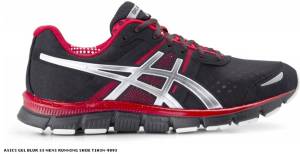
REVIEW – ASICS GEL BLUR 33 RUNNING SHOES

The Asics Gel Blur 33 running shoes are an exciting new development from Asics. They are inspired by the 33 joints that allow your foot to move efficiently. This lightweight trainer is specifically designed for those who enjoy cushioning, flexibility and the comfort of a breathable mesh upper.

The Gel-Blur 33 is the first to debut out of the collection and ensures that you are comfortable and maintain flexibility. These runners are perfect everyday running shoes that provide cushioning through a rearfoot GEL Cushioning System and Solyte midsole.

Also featuring a no-sew upper and ComforDry Sockliner and five flex grooves, you wouldn’t believe that the shoes only weight in at 9.98 ounces for men and 7.85 ounces for women. The ComforDry sockliner provides a snug fit that prevents your foot from slipping and has helped reduce the amount of moisture retained in the shoe.

The Asics Gel Blur 33’s can be worn everyday or can be used for low mileage running, either way you’ll get good use out of these runners. For those of us that are prone to heel striking the gel cushioning has been placed in the area of the shoe that receives the most impact.

Flexibility was at the forefront of the Asics Gel Blur 33’s design. Flexibility is extremely important as not only does it improve the feel and fit of the shoe, but it also allows for a more efficient stride due to a smoother transition. The Gel Blur 33 has been fitted with a number of flex grooves which flex in line with your foot’s forward movement while also offering support.

The Asics Gel Blur 33 running shoes are now available at Sportsmart as part of our new Performance Lifestyle range. You can view the Asics Gel Blur 33 running shoes online or visit our stores to check out these runners in person.

HOW TO HIT BASEBALLS

In baseball being able to hit a ball is half the game. Many ballplayers have their own unusual hitting styles, but most follow the same basics for making good contact and piling up the base hits.

If you bat right handed, grip the bat with your left hand at or near the narrow end of the bat and your right hand above your left hand. If you bat left handed, your left hand is on top and right hand should be on the bottom. Usually you want to leave no room in between your hands. Your bottom hand can rest on the rim of the base of the bat or if it feels more comfortable, you can choke up. Choking up involves having a space of up to a few inches between your bottom hand and the rim.

Stand parallel to the home plate with your feet about shoulder width apart. You want both feet facing directly at the home plate with your knees slightly bent.

Touch the end of the bat to the centre of the home plate. This will give you a feel for how close to the plate you need to stand. You want to be able to swing the bat all the way over the plate without leaning. Stand in the batter’s box where you feel comfortable, you must ensure both feet are in the box and you are not standing on the plate. The farther forward you are in the box, the less time you have to see a pitch.

Hold the bat slightly behind your head, but up in the air not resting against your head, neck or shoulder. When the pitch comes, watch the ball and never take your eyes off it until after you have swung or let it go past.

To start your swing, step towards the pitcher with your left foot (or right foot if you are left handed).You want the foot to still be facing the plate or a little in front of the plate. As that front foot goes down, pivot the front of your back foot until that foot is facing the pitcher. Pretend like you are squishing a bug. This back foot should never leave the ground during your swing.

Swing the bat over the home plate while you pivot your back foot. Bring the bat all the way across and over the home plate. Your arms should extend all the way when swinging. Swing the bat all the way through. Most of the power will come from your legs and hips not your arms. Swing straight through the ball, not up at the ball or down. You want a nice, parallel with the plate swing.