
Category: SOCCER
SOCCEROOS WORLD CUP JERSEY NOW AVAILABLE


CELEBRATING 44 YEARS OF SPORTSMART!
To celebrate 44 years of Sportsmart servicing Melbourne’s sporting needs, you can save up to 44% on selected sporting goods! We have a huge list of specials across all of our major categories available in store and online.
Check out some of our specials below:
– Brooks Adrenaline GTS 13 mens and womens running shoes was $219 now $122 save 44%

Brooks Adrenaline GTS 13 mens
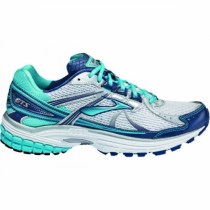
Brooks Adrenaline GTS 13 womens
– 44% off all full price Under Armour (image for illustration purposes only)

– 44% off all Ali boxing products
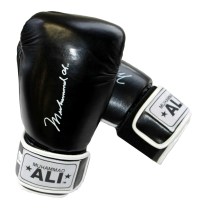
Ali boxing gloves
– Head TI S2 tennis racquet was $199 now $111.44 save 44%

Head Ti S2 tennis racquet
– Nike Tiempo Technique soccer ball was $24.99 now $14 save 44%
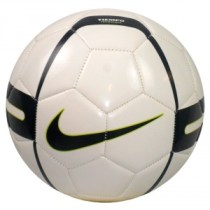
Nike Tiempo Technique soccer ball
For our full list of specials, click here.
Be quick! Sale ends 20th Oct 2013.
REVIEW – ADIDAS 11PRO SL TRX FG FOOTBALL BOOTS
The Adidas 11Pro SL TRX FG football boots combine technology and innovation with heritage to create a K-leather lightweight football boot. The K-leather is used in the forefoot and tongue area to provide you with incredible fit and feel. Sprintskin is used in the heel area to reduce as much weight as possible.
Stability during lateral movements is optimised with the use of a 360 degree support saddle. This is an ultra thin anatomically shaped saddle which wraps around the midfoot. The Sprintframe construction uses a stud shape and geometrical learnings to create the perfect balance of stability and lightweight construction.
The Traxion 2.0 stud configuration provides maximum acceleration on natural, dry and firm ground surfaces. The Adidas 11Pro football boots are miCoach compatible, so if you have speedcell you are able to measure distance, speed, speed zones and the number of sprints you do during training or a match.
The Adidas 11Pro SL TRX FG football boots are available both in store and online. Click on the image below for more information.
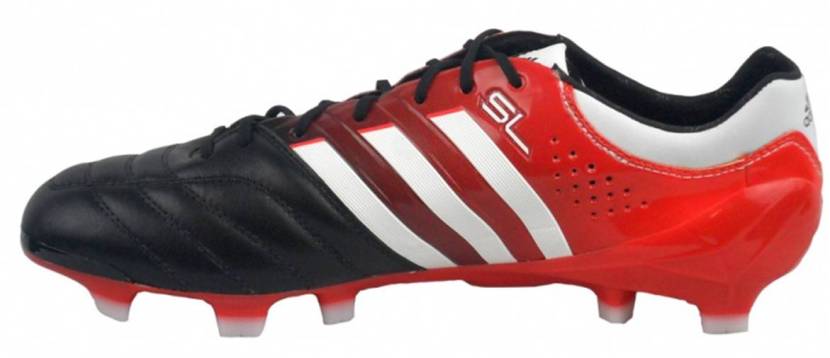
What do you think of the latest Adidas 11Pro football boots?
DONATE YOUR PRE LOVED FOOTBALL BOOTS TO A GREAT CAUSE!
Sportsmart is working with the Reagan Milstein Foundation to collect pre loved football boots. The Reagan Milstein Foundation collects pre-loved football boots and passes them on to children who cannot afford to buy boots.
These children can sometimes be in communities as far away as Tonga or Cambodia or as close as Northern Territory or Dandenong, depending on the need at the time.
They also collect unused and unwanted sporting uniforms so if your club has boxes of left over gear in its garage they are happy to take it off your hands. None of these items are resold.
The donations bin is located in our footwear department at Sportsmart Moorabbin. If you have any boots or gear you don’t wear anymore, bring them down as your donations will help those in need.
For more information visit http://reaganmilsteinfoundation.com/main/?p=1329

Look for the donations bin in the Sportsmart Moorabbin footwear department
HOW TO LEARN ADVANCED SOCCER MOVES
Advanced soccer moves and skills have developed massively. More and more diverse abilities, skills and tricks have emerged and evolved to the extent that when a top flight player now tries something new on soccer’s world stage, the whole soccer world sits up and takes notice.
The wealth of advanced moves in a 21st century player’s repertoire means that there are a host of tricks and techniques available to learn. The key to learning how to successfully carry out these moves is hard work, dedication and practice. Learning these moves can be extremely rewarding and can lead to making a match winning contribution on the pitch.
Watch and learn. If you want to learn advanced soccer moves, you have to first watch other players and examine their techniques. Study games from top flight leagues and watch the skilful abilities of top players.
Furthermore, there are a lot of websites dedicated to advanced skill tutorials. Pay close attention to how these player do these skills with the ball and study tricks they do. Try out the skills you have seen in slow motion. Concentrate on keeping the ball under close control and focus on successfully completing moves. Note that some skills require quick movements and cannot be completed in slow motion. When this is the case, try it at full pace and work on a trial and error basis in order to improve.
As you improve you will naturally increase the pace at which you are able to do soccer moves. Remember that learning advanced moves can take a long time and can be a frustrating process. Do not worry if you do not develop as quickly as you had hoped for.
Take on your teammates. Whether it is in the park having a kick about or on the training field,, this is the environment where mistakes are acceptable. If you attempt complex tricks in a match and they don’t work out you can be responsible for your side conceding a goal.
Encouraging your teammates to try their skills on so you so they will let you try yours on them. Not only is this in the interest of fairness, but you can also learn tips and tricks from your teammates and you can also learn about moves trying to defend against them.
Use advanced moves in a match. This is your biggest stage. Be warned that these moves will look good in training; you can make damaging mistakes if they are unsuccessful in a match. Only attempt these moves if you have confidence that they will be successful.
HOW TO CORRECTLY KICK A SOCCERBALL
Kicking a soccer ball sounds fairly easy, but there is a specific way you should kick the ball to ensure a more accurate kick. Once you have the basic technique down, you will be able to expand your kicking skills to include more elaborate techniques.
Place the soccer ball on the ground about four feet in front of you. Locate the inside area of your kicking foot, stretching from your big toe to your heel. This will be the area on your foot you will use to kick directional kicks, which you can use to push the ball to a teammate.
Start stepping toward the soccer ball. If you use your right foot to kick it will be used to make the last step before the ball. If you use your left foot to kick, it will be used to make the last step before the ball. In a consistent motion step about two feet from the ball and then step with your opposite foot slightly in front and to the side of the ball.
As you step with the opposite foot past the soccer ball, drag your kicking foot behind. Allow your weight to transfer and swing your leg through the ball as your foot makes contact. Using the inside of your kicking foot will help you aim the ball as you basically push it across the field.
Place the soccer ball on the ground in front of you again, this time six feet away to practice kicking longer kicks. Approach the ball with longer more powerful steps. Contact the bottom of the ball with your toes and the back of the ball with your shoe laces. Swing through with your kicking leg with as much power as you can. Note how far the ball travels. Practice hitting the ball to lengths in increments of twenty feet. You will soon be able to determine how much power you need to exert for each kick.
Place the soccer ball on the ground in front of you again, this time placing the ball in front of a goal with a net. Decide what part of the net you want to kick the ball into. To loft the ball into one of the top corners, you will need to get under the ball with your toes. To kick to the right corner, place your foot under the left side of the ball. To kick to the left corner, place your foot under the right side of the ball. If you want to kick the ball to one of the bottom corners, kick the upper half of the ball to keep it low. Hit the left side of the ball to force it to the right. Hit the right side of the ball to force it to the left.
HOW TO TEACH BASIC SOCCER SKILLS
As in most games, the key to teaching basic soccer games is to make the players learn the skill while having lots of fun. The basic soccer skills include dribbling, shooting, heading, tackling and goalkeeping. Focus on one skill at a time and move on to the next one after some practice. Don’t linger on one area for way to long or boredom will set in and players will start losing interest.
Teach the team about the role of players in each of the three positions: forward, midfield and fullback. Split the players into three groups and line them up one behind the other. Each group plays one position for a game and then the groups switch position. This way, each of them gets to play in every position.
Introduce dribbling. This is by far, the most important basic skill in soccer as dribbling is how the ball moves across the field while keeping it under control. Explain the importance of keeping the eyes on the ball, never letting the ball move more than a couple of feet away from the body, shielding the body between the ball and opponent players and always keeping an eye on the positions of other players.
Teach shooting, which is kicking the soccer ball over a long distance either into the opponents net or to another player of the same team. Demonstrate and let the players practice the basic shooting steps of keeping the eye on the ball, approaching at a slight angle, placing the non-striking foot on the side of the ball, maintaining the knee of the striking leg over the ball, making contact at the centre of the ball and following through.
Introduce the idea of heading but keep in mind that it can be tricky to teach and master. There are intricate details to the technique, start with the basic skill of making contact with the ball with the forehead, eyes open until contact.
Practice slide tackling, where the defender must stop an opponent player. Instruct and practice slide tackling only and leave block tackling to more experienced players.
Ensure that all players practice goalkeeping. At the basic level, focus on proper catching techniques and avoid teaching driving.
TIPS FOR INDOOR SOCCER GOALIES
Playing indoor soccer is a lot of fun. Compared to outdoor soccer, which requires a certain amount of skill and experience, indoor soccer is more open to the recreational athlete looking to have a good time. There are generally give players on the indoor field, plus a goalie. Being an indoor soccer goalie is a very challenging position considering the large number of shots taken and the high score of most indoor soccer games. Playing goalie can also be a lot of fun as long as you keep a few things in mind.
Guard your goal with your life. The goal in indoor soccer is small and it often doesn’t pay to take too many risks that involve leaving the goal. If there is a breakaway and you need to come out a bit, make sure you extend your body fully by diving or leaping so that the net is never left open. Otherwise stay close to home.
Play the walls. Unlike the outdoor sport, in indoor soccer there are walls and the ball rarely goes out of bounds. A little bit like hockey, this can lead to ricochets where the offense ends up with an easy shot or a header right in front of the goal. Always keep in mind that a desperate or crafty offense will use the walls to their advantage in creating unlikely scoring opportunities. If you can play the ball off the wall, you have a good chance of blocking these opportunities before they develop.
It is important to direct your teammates. The indoor soccer arena is small enough that everyone can hear everyone else wherever they are on the field. As a goalie it’s your job to let your teammates know where to position themselves on the field in order to be most useful – especially the defensive players. Often players in the field will lose track of their location or players on the other team and it is the goalie’s responsibility to remind them of these facts.
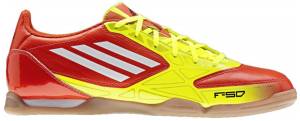
HOW TO LOB PASS IN SOCCER
Perform a lob pass when an opponent is standing between you and an open team mate down the field. The basic idea of a lob pass is to strike the bottom part of the ball using the inside of your foot with enough power to get it over an opponent and safely to your team mate.
Sometimes it is even possible to use a lob pass to score a goal by lobbing it over the goalie’s head when he comes out too far.
Start by looking past the opponent on the field for an open team mate. Dribble the ball to a near stop about 3 to 4 feet in front of you. Approach the ball with your arms to the side and leaning slightly backwards for maximum balance.
Plant your non-kicking foot next to the ball and bring your kicking foot forward at a 45 degree angle from a slight back swing while swinging your hips to create additional power.
Get your kicking foot underneath the ball and strike the lower half of the soccer ball with the top part of the inside of your foot. Make sure to angle your toe down during the striking movement. You need to strike with enough lift to get the ball over the opponent’s head, while also striking with an appropriate amount of force to lob the ball directly to the teammate and not too far in front of or behind him.
SOCCER TRAINING FOR BEGINNERS
Soccer can be played at any age. When teaching the sport to anyone who is a beginner you must start with the basic skills and then slowly show how they are all put together to play the game. Soccer is a game of skill and fitness and can be challenging for beginners.
It is best to start training soccer players at an early age. As your feet are predominantly used in soccer, the sooner the training starts the better. It would be advised to start training soon after basic motor skills are mastered. As it is unnatural to use feet in such a skilled way, players who begin at an earlier age are able to excel at soccer sooner than their peers.
When training the focus should be on learning basic skills such as dribbling, passing and shooting. Dribbling the soccer ball should be practiced with both feet and while keeping your head up. The ball should remain as close at a step or two away at the most when running and always be under control.
Passing can be worked on by using the inside of the foot and passing the ball on the ground with smooth strokes. Start at a small distance and then begin to increase the distance. Shooting can be practiced by teaching the proper shot technique (knee over the ball, using the laces, striking through the ball) from a distance. Both feet should be used.
Beginner’s soccer conditioning should start with distance running. Running laps around a soccer field will get the body familiar with the size of the field and the distance the legs will be covering. Soccer is also a game of constant movement with sprinting elements. It is best advised for beginners to practice interval conditioning training. This type of training has players run or jog at one speed, then sprint a certain distance and then return to their original jogging pace.
Ball control can be practiced alone or with a partner. Beginners should start by mastering juggling the ball. Juggling refers to keeping the ball in the air by using different parts of your body and keeping the ball under control. Another way to practice ball control is to have someone either toss or kick a ball to you and you can practice ‘trapping the ball’ Trapping refers to gaining control of the ball from the air with your body.
 blog.sportsmart.com.au