TREADMILL EXERCISES FOR BEGINNERS

Treadmills are a popular piece of exercise equipment. Whether you walk or jog, treadmills can be a fun way to exercise.

Do stretching exercises before getting on the treadmill. Stretching keeps your muscles from being overworked or injured. Stretching before your workout also prevents cramping in your muscles. Sit on the floor, bend your knees and put the bottoms of your feet together. Press your hands down on your knees while leaning forward a little. You’ll feel the stretch in your inner thighs. Hold this stretch for about 10 seconds and repeat.

For another stretching exercise, stand with your feet about two feet apart. Slightly bend your knees, then bend forward at your hips, placing your hands around your ankles. Hold this position for about 10 seconds and repeat. You’ll feel the stretch in your hamstring muscles.

Start out just walking on your treadmill – no jogging yet. Walk normally. Leave running for when you’re more experienced. Set the treadmill at the lowest speed, then as you walk, start to slowly increase speed. It is OK to use the handrails until you can walk without them.

During your first week continue walking at the slightly faster speed  even if you can walk faster. Walk for 30 minutes each day. The next week increase your speed gradually. Rest one day during the week.

After two weeks, start using your incline, start with the lowest, working up a percentage every five days or so. Continue walking 30 minutes each day. Keep a record of your treadmill sessions. This keeps you motivated and inspired. Remember to always stretch before working out and wear good walking or running shoes for your workout.

 

HOW TO LEARN ADVANCED SOCCER MOVES

Advanced soccer moves and skills have developed massively. More and more diverse abilities, skills and tricks have emerged and evolved to the extent that when a top flight player now tries something new on soccer’s world stage, the whole soccer world sits up and takes notice.

The wealth of advanced moves in a 21st century player’s repertoire means that there are a host of tricks and techniques available to learn. The key to learning how to successfully carry out these moves is hard work, dedication and practice. Learning these moves can be extremely rewarding and can lead to making a match winning contribution on the pitch.

Watch and learn. If you want to learn advanced soccer moves, you have to first watch other players and examine their techniques. Study games from top flight leagues and watch the skilful abilities of top players.

Furthermore, there are a lot of websites dedicated to advanced skill tutorials. Pay close attention to how these player do these skills with the ball and study tricks they do. Try out the skills you have seen in slow motion. Concentrate on keeping the ball under close control and focus on successfully completing moves. Note that some skills require quick movements and cannot be completed in slow motion. When this is the case, try it at full pace and work on a trial and error basis in order to improve.

As you improve you will naturally increase the pace at which you are able to do soccer moves. Remember that learning advanced moves can take a long time and can be a frustrating process. Do not worry if you do not develop as quickly as you had hoped for.

Take on your teammates. Whether it is in the park having a kick about or on the training field,, this is the environment where mistakes are acceptable. If you attempt complex tricks in a match and they don’t work out you can be responsible for your side conceding a goal.

Encouraging your teammates to try their skills on so you so they will let you try yours on them. Not only is this in the interest of fairness, but you can also learn tips and tricks from your teammates and you can also learn about moves trying to defend against them.

Use advanced moves in a match. This is your biggest stage. Be warned that these moves will look good in training; you can make damaging mistakes if they are unsuccessful in a match. Only attempt these moves if you have confidence that they will be successful.

HOW TO CORRECTLY KICK A SOCCERBALL

Kicking a soccer ball sounds fairly easy, but there is a specific way you should kick the ball to ensure a more accurate kick. Once you have the basic technique down, you will be able to expand your kicking skills to include more elaborate techniques.

Place the soccer ball on the ground about four feet in front of you. Locate the inside area of your kicking foot, stretching from your big toe to your heel. This will be the area on your foot you will use to kick directional kicks, which you can use to push the ball to a teammate.

Start stepping toward the soccer ball. If you use your right foot to kick it will be used to make the last step before the ball. If you use your left foot to kick, it will be used to make the last step before the ball. In a consistent motion step about two feet from the ball and then step with your opposite foot slightly in front and to the side of the ball.

As you step with the opposite foot past the soccer ball, drag your kicking foot behind. Allow your weight to transfer and swing your leg through the ball as your foot makes contact. Using the inside of your kicking foot will help you aim the ball as you basically push it across the field.

Place the soccer ball on the ground in front of you again, this time six feet away to practice kicking longer kicks. Approach the ball with longer more powerful steps. Contact the bottom of the ball with your toes and the back of the ball with your shoe laces. Swing through with your kicking leg with as much power as you can. Note how far the ball travels. Practice hitting the ball to lengths in increments of twenty feet. You will soon be able to determine how much power you need to exert for each kick.

Place the soccer ball on the ground in front of you again, this time placing the ball in front of a goal with a net. Decide what part of the net you want to kick the ball into. To loft the ball into one of the top corners, you will need to get under the ball with your toes. To kick to the right corner, place your foot under the left side of the ball. To kick to the left corner, place your foot under the right side of the ball. If you want to kick the ball to one of the bottom corners, kick the upper half of the ball to keep it low. Hit the left side of the ball to force it to the right. Hit the right side of the ball to force it to the left.

HOW TO IMPROVE YOUR SOFTBALL THROW

Even the most seasoned athlete needs to improve their game sometimes. Know that patience, practice and control are key factors to improving your softball throw. No matter what age you are, basic pitching techniques and mechanics are generally the same.

Start by warming up daily. A brief or short warm up will make you more flexible and will ultimately prevent short or long term sports injury. Try to also condition yourself with non-softball related exercises. This could typically include running, weight lifting or swimming. The aim with these types of work outs is to increase your overall endurance, strength and speed.

Practice and focus on mechanics. Many professionals spend hours perfecting the game, even when they are alone. Find a local batter’s box. You will probably meet other softball players this way, if you are not already on a team. You can pitch, they can hit. Know how to properly grip and release. Techniques to incorporate into your practice sessions are: the swim, wrist flips, receiving and front arm drills.

Set goals by writing down a schedule. Write down each throwing technique you learned and how long it took you to perfect them. As with any learning forum, it is a good idea to keep track of what you learned and how you went about learning.

And finally, practice every chance you get!

DON’T PAY OVER $60 FOR SPORTS SHOES!

There’s never been a more perfect time to upgrade your sports shoes! We’re offering our customers a range of sports shoes including runners, cross trainers, track and field, junior footwear, junior tennis, junior football, cricket, junior basketball, basketball and indoor at $60 or less!

Take advantage and save on selected styles from the biggest brands including Nike, Adidas, Asics, Puma, Diadora, New Balance, Brooks, Nomis plus heaps more.

Check out our website for more details and get in quick as our sale ends 31st Jan.


WHAT IS THE PROPER WAY TO HOLD A BASEBALL BAT?

As a baseball player enters the batter’s box and prepares to hit the ball, the time spent practicing and perfecting his technique will pay off with a ball hit solidly into the field. A fundamental part of hitting a baseball involves holding the baseball bat correctly. When a baseball player knows the proper way to hold a bat, they will have more success at the plate.

Follow our instructions to help you hold a baseball bat properly.

  1.   Put on batting gloves as you bat to increase the comfort of your grip.
  2.   Grasp the bat at the bottom just above the knob with your non dominant hand.
  3.   Place your dominant hand immediately above your other hand on the bat.
  4.   Hold the bat firmly with the fingers of both hands – not the palms of the hands. Grip the bat tightly   enough to have adequate control, yet not so tightly that you feel tense. An overly tight grasp may affect your batting accuracy. Wiggle the fingers of both hands to reduce tension in your hands.
  5.   Raise the bat and place it back toward the shoulder farthest from the pitcher as you stand at the plate. Keep your hands roughly at shoulder height.

Some extra tips:

Relax as you grip the bat. When you relax, you can react faster to pitches.

For more bat control, you can choke up which means moving your hands slightly up from the knob.

HOW TO TEACH KIDS TO SHOOT FOUL SHOTS

Teaching kids how to shoot foul shots is an easy concept for the most part. However, free throws are often underrated in terms of importance as they are extremely hard to master. Fundamentals are important, but having the right mental approach is just as significant which is why good shooters can sometimes struggle at the free throw line.

Start by teaching the fundamentals of shooting. The kids probably have a general idea of what to do at this point but have them practice regularly and remind them of the proper technique. Their shooting hand should do the work and their guide hand should just guide. Also, their legs should help with the shooting motion, they should come down and then up as they release the ball.

Inform the kids about free throw rules. Their body should be in line with the basket and their toes should be just at the edge of the free throw line. Also let them know they have only 10 seconds to shoot in most instances.

Tell them they can shoot closer to the basket at first, if need be. Younger kids may find the distance form the basket to the line may be a bit much for them to accurately practice the fundamentals. At this point, mastering the proper form is more important than shooting from the same distance as the professionals. Teach the kids to sharpen their mental focus when they are at the free throw line. Some opposing players may employ subtle distraction techniques such as clapping their hands or coughing when the kid tries to shoot. Tell the kids that no matter how high pressure the situation, they should relax and envision themselves and the basket and stick to form.

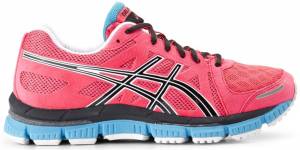
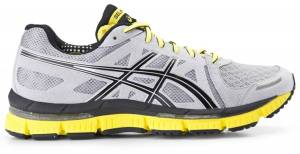
REVIEW – ASICS GEL NEO 33 PERFORMANCE LIFESTYLE SHOE

The Asics Gel Neo 33 is an exciting new development by Asics. Designed as a lightweight trainer, they are ideal for those looking to use for a low intensity workout for any training purpose. The Asics Gel Neo 33 takes supportive running to a whole new level of comfort and flexibility. Named for the 33 joints in the human foot, the shoe is built to mimic the natural movements of your foot for a smooth and balanced ride.

These runners are quite forgiving and flexible which provides great energy return on the road while also working to correct mild to moderate over pronation. Featuring a new DuoMax Support System combined with a full ground contact outsole to provide a stable, lightweight, natural fit and feel.

The new design is bold and the high performance of this new comer will appeal to runners everywhere. The featured Impact Guidance System (I.G.S) enhances the foot’s natural gait from heel strike to toe-off. The rearfoot and forefoot Gel cushioning lessens shock during impact and toe-off phases and allows movement in multiple planes as the foot transitions through the gait cycle.

The Asics Gel Neo 33 shoes are now available at Sportsmart as part of our new Performance Lifestyle footwear range. You can view the Asics Gel Neo 33 shoes online or visit our stores to try a pair on for yourself.

HOW TO TRAIL RUN

If you have running experience, you should be able to handle a trail run. Just keep the following tips in mind as you prepare for your run.

Run on roads for a while before moving to trails. It helps to have a base level of fitness before you attempt your first trail run. Wear trail running shoes (refer to our article ‘how to choose trail running shoes’ under the category ‘product buying tips’ and dress in high performance running clothes that are appropriate for all potential weather conditions.

Prepare by eating and drinking the proper things before and during your run. Run on trails that are suitable to your level of fitness. Choose flat trails if you’re a beginner or more challenging trails if you’re an experienced runner.

Plan ahead. If the trail is an ‘out and back’ make sure you turn around early enough to enable you to run all the way back to the trailhead. Find a reliable partner if the trails you will be running on are remote or difficult to get to. Remember to warm up before you begin. Stretch your legs and arms and walk for a few minutes.

Keep your head up and your eyes on the trail ahead. Avoid looking down at your feet. Watch for obstacles such as rocks, roots, logs and branches. Stay on the trail at all times, even when it’s muddy or wet. Cutting switchbacks and bypassing tricky sections leads to trail deterioration.

Pace yourself. Save energy for the miles ahead. Slow down on steep climbs. Many experienced trail runners ‘power walk’ steep sections and make up the lost times on flats and downhill slopes. Stay in control on steep descents. Keep your head up, control your speed and avoid obstacles.

Warm down during the last few minutes of your run. Stretch after you have finished.

HOW TO IMPROVE YOUR SERVE IN TENNIS

Having an effective serve is crucial in competitive tennis, since it’s the shot the sets the tone for the point to follow. Improving your serve enhances your ability to dictate how the points in your service game are played. Increasing the speed of your serve can make it a more dangerous weapon on the court. It’s important not to overlook other equally important facets of your service delivery when looking to improve.

Work on the placement. More important the power of your serve is its placement. An extremely fast serve that lands somewhere near the baseline or rips into the net is of no use. It only puts more pressure on your second serve. A slower serve that nestles inside the corner of the service box and spins away from your opponent’s racquet may be less flashy but is far more effective. Even if it is not an ace or service winner, it may give you the opportunity to come in and pick off an easy volley for a winner. Taking a little pace off your first serve for accuracy and a higher serve percentage will pay off in the long run.

Watch your feet. Your front foot should be planted firmly for the whole service motion. If you’re making slight adjustments during it, you run the risk of being off balance when hitting the ball. As you begin to raise your tossing arm and begin the wind up of the racquet arm, your weight will be on your back foot and we will transfer to the front foot as your serving motion progresses.

Watch the ball toss. It is important to try and keep your toss consistent. Unless you’re trying for a kick serve, where the toss will be slightly behind you make sure that the toss goes straight up in a direct line slightly in front of the area where your front foot is planted. Keep your eye on the ball and don’t make the mistake of altering the toss according to the direction you’re trying to serve in. Consistency is key to finding a rhythm on your serve.

Bend your knees. Bending the knees as you wind up for the serve will enable you to generate more power as you uncoil upwards and into your service motion. Reach up into the swing. Try to hit the ball at its highest point, making sure that you’re reaching up into the shot. Since your legs are bent, you have the capacity to propel your body into the serve. Remember, the higher the ball is when you hit it, the more power you’ll be able to create and the better the angle will be for bringing the ball down into the court.

Turn your shoulders. The rotation of your shoulders into the service determines the direction and accuracy of the delivery as well as supplying the power. Trying to create pace with your arm or wrist is a recipe for muscle strain and an inconsistent serve. As you reach for the ball, your racquet arm should be slightly lower than the tossing arm. As you swing to strike the ball, the rotation will bring the serving shoulder up and over and along with the push from your legs will give you the necessary power and direction for the shot.

Follow through. Although the forward motion of the racquet will vary a little depending on whether it’s a flat or a kick serve, the racquet should continue to move in an arc across your body at the end of the swing as you readjust your feet in preparation for the service return.