
Category: SOCCER
SPORTSMART BOOT VAN
Try before you buy with the Sportsmart Boot Van!
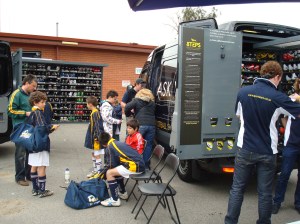
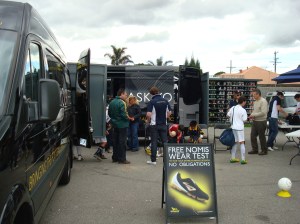
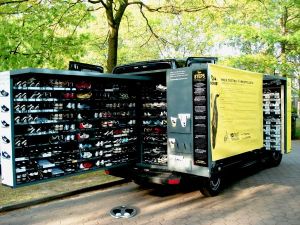
Sportsmart is proud to offer a new service for local club footballers with our brand-new custom-fitted Mercedes-Benz Sprinter van – home to more than 120 pairs of ‘try on’ Nomis football boots.
Players can try out various Nomis football boots during training, to make an informed purchase decision. This unique ‘try-on’ experience, along with expert advice from Sportsmart staff, helps players get the correct boot to suit their needs.
Nomis is the chosen football boot of many international and national football stars, but this service is not exclusive to stars – this is how Sportsmart treats all players at all clubs.
We are offering this ‘try before you buy’ football boot experience to all clubs who want us to visit with our Sportsmart Boot Van and expertly fit out their players with Nomis football boots.
There is absolutely no obligation to buy and all players are free to trial the Nomis football boots during training. We believe this, combined with Sportsmart’s expert advice, is the best way to purchase football boots.
If you want us to fit out your club, email clubdirect@sportsmart.com.au to arrange a time for a visit by the Sportsmart Boot Van.
Nomis football is an Australian football boot company supplying premium quality leather football boots to players who seek performance, fitness, injury prevention and superior comfort.
SOCCER TRAINING TIP: BALL CONTROL
Personal trainer, Tavia Ambler
Soccer requires precise passing skills. If everyone in the team masters this skill, benefits include:
- Ability to ‘control’ the game, with a higher percentage of possession time with the ball thus increased chances of setting up vital plays and goals.
- Ability to fatigue opponents by making them chase the ball.
Components that must come together to execute a good pass include: technique, positioning, movement, pace and accuracy. Along with the physical side of skills and play, players need to communicate and be aware of their team members.
Passing/ball drills
Jogging while dribbling the ball
Begin by jogging around the oval while touching the ball in front. Progress to setting the ball up for a variety of passes. For example, touch the ball with the outside of the foot, then move into position to make a pass with the inside of the same foot. Be sure to use the right foot and left foot equally.
3-man weave
In a group of three, begin in a straight line with one ball between you. While jogging, the middle player kicks the ball to the person to their left, then runs behind them. That player then ends up in the middle and, after receiving the pass, kicks to the player on the right then runs behind them. Repeat this process until you have reached the end of the ground.
Dribbling around a set of cones
Along the oval, set up a group of cones one to two metres apart. Dribble the ball around the cones, keeping control to ensure it doesn’t hit any of the cones.
Kick to kick (short and long passing)
Find a partner and stand short distance from each other. Start by kicking the ball back and forth, maintaining control. Add in a few variations: use both feet then eventually change the distance and angles, and run between each other.
Ball pass and goal combination
With a group of players, stand in a line about 25 metres from the goals. Have a player/coach kick the ball out in front of the line so that the front player has to run on to the soccer ball and then set up and kick a goal. Repeat so that each player has about five turns.
CARING FOR GOALKEEPER GLOVES
Sportsmart Football Manager, Andrew McCaig
Wear and tear
From the first moment you use your goalkeeper gloves you will start to notice wear and tear of the latex. This is natural. The effect is similar to how, after using an eraser on paper, it wears at once, but is not any less functional. As the latex wears, the quality of the grip is not compromised. The latex is consistant all the way until completely worn through. Never rub the goalkeeper glove palms together as the abrasion creates wear immediately.
Durability
Dry and/or rough surfaces quickly wear a soft latex goalkeeper glove, so use a harder or rougher dimpled palm in these conditions. A rougher latex is more durable than a soft latex, so use a rough latex for hard, dry and indoor surfaces and a soft latex in the wet or muddier conditions.
Best care for use
Remember to dampen the latex palms before using your goalkeeper gloves. This has two benefits: it reduces abrasion and heightens the grip quality. Top-class goalkeepers always carry a towel and water bottle with them in their goals. A keeper can then dampen his gloves during a game to wash away residue.
Care after use
After evey use, wash your goalkeeper gloves by hand in lukewarm water with a mild detergent, rubbing the palms gently. This will remove greasiness and film build-up on the palms, which is common on grassy surfaces and can badly damage the grip quality of the latex if not removed. Allow your gloves to dry naturally – not on vents or heaters and never in direct sunlight. UV rays cause latex to prematurely dry out and become brittle. Dry in a shaded breezy area for best results. Washing and drying carefully will help to ensure your goalkeeper gloves will retain their comfort and grip.
Storage
Never store your goalkeeper gloves together when wet as they will dry stuck to each other, which can damage the latex palms. A quality glove bag that allows airflow and has a separate compartment for storage should be used.
*Our Moorabbin store stocks quality Uhlsport goalkeeper bags and specialised Uhlsport goalkeeping glove cleaning solution, which is one of the best cleaners on the market.
CHOOSING THE RIGHT GOALKEEPER GLOVES
Sportsmart Football Manager, Andrew McCaig
Important factors to consider when choosing goalkeeper gloves:
1. Consider features of the goalkeeper’s glove body that will suit the playing conditions.
Features can include:
- Mesh (better airflow/less sweat and generally lighter)
- Fleece-lined (good for cooler temperatures)
- Water repellent
Take these body types into consideration depending on the environment in which you are playing or training.
2. Get the correct fit and size to suit your hand.
Most glove manufacturers recommend that you never wear a glove that fits like a glove. Ensure you have approximately a thumbnail space above your middle finger on both goalkeeper gloves. Never have your fingertips at the very end of the gloves. Wearing your gloves a little larger, say by half a size, increases the shock absorption from the impact of the ball and also reduces stress on the latex and stitching. This will give the goalkeeper glove a longer lifespan.
Hands come in different shapes and sizes, so try on as many gloves as possible to get the best fit. Grab a ball and feel the glove on the ball, bounce the ball and get to someone to throw the ball to you. You should get a good feel of the ball, making sure there is no movement around the palm inside the goalkeeper glove. Movement inside the glove increases the risk of the ball slipping from your grip. The latex palm of the goalkeeping glove is designed to give you shock absorption and maximise grip, especially in wet conditions.
Goalkeeping gloves come in many different cuts so try as many as you can to find the cut best suited to your hand shape. The basic cuts are flat, rolled finger, negative cut and bowl cut.
ALL ABOUT SHINGUARDS
Sportsmart Football Manager, Andrew McCaig
Wearing shinguards has been compulsory for about 20 years. Over this time, the shinguard has evolved with remarkable changes. Now, with the latest materials being used, shinguards are much lighter and less cumbersome. With a large selection now available, everyone should be able to get the perfect fit.
A correctly fitted shinguard should cover about 75% of the tibia. They should not be worn too close to the knee or ankle; about 4cm should be allowed at each end so as not to impede mobility or touch.
I recommend all young children up to the age of 10 be encouraged to wear a shinguard that offers ankle and achilles protection. Getting used to the extra protection at an early age lessens injury risk and teaches them to identify a safer shinguard as they become more independent with their choices.
A shinguard that offers velcro strapping at the top and bottom also delivers more stability and lessens the chance of movement. Many shinguards now come with removable ankle protection which gives the guard a better fit over the tibia, then pulling on the ankle protection attachment. Well fitted, a shinguard should be snug around the shin and ankle, not protruding at the side of the calf like wings. This also allows any severe contact on any area of the shin to be absorbed and spread through the guard, reducing the impact on the area of contact.
Players should be aware that referees are instructed to inspect shinguards, which should be completely covered by socks/stockings. A referee can refuse a player permission to play should they feel their shinguards do not offer suitable protection.
CHOOSING THE RIGHT INDOOR SOCCER FOOTWEAR
Sportsmart Footwear Manager, Ryan Meggs
Q. What should I look for when choosing an indoor soccer boot?
There are a few key things to look for when selecting an indoor soccer boot. The materials, fit and outsole grip are all very important in providing enough grip and support as well as comfort and ball control.
Q. Why are there specific shoes for indoor soccer?
The outsole of an indoor shoe is the main difference between normal running and cross-training footwear. This is because the outsole is made from gum rubber, which is an orange/brown colour, and as it heats up it becomes sticky and provides extra grip on a variety of surfaces.
Q. What brands of indoor soccer boots does Sportsmart stock?
As indoor soccer is a becoming a very popular sport for both serious players and more social players, Sportsmart carries a wide range of boots to cater for all types of players.
The following brands are stocked at Sportsmart stores: Nike, adidas, Puma, Asics, Nomis, Kelme, Reebok, Lotto, Diadora.
SOCCER TRAINING TIP: WARM-UP DRILLS
A warm-up before a soccer game or training is very important. It decreases the risk of injury (strains, sprains and tears), increases agility, skill, power and performance and also allows for players to mentally prepare themselves individually and with the team as well.
If a muscle is not warmed up properly then it remains cold and rigid and therefore unable to properly deal with movements such as twisting, turning and sharp movements that occur in the game of soccer.
Warm muscles are also able to produce energy at a faster rate, which can affect a player’s speed and power as well as the ability to carry out specific skills and movements during the game.
Try these warm-up exercises:
- Shuttle runs: Place 4 cones about 20m apart. Begin by running to the first cone and back then do the same to the second and back. Repeat until you have run to all 4 cones and back. Repeat this same process with high knees, side steps, bottom kicks and also sprints. You can also incorporate the ball into this, so that you have to run to each cone dribbling the ball.
- Three man weave: Three players stand on a line about 10 feet apart, with the middle player possessing the ball. All three players then run down the field, but the middle player (the passer) lags behind a little then chooses which side to pass the ball to – say, the right. The passer then runs behind the player on the right and switches sides so that the player on the right now becomes the middle player. Now, the middle player passes to the player on the left and then runs behind him to switch positions. This rotation continues for the length of the playing field and ends with a player kicking the ball into the goal (www.soccer-training-info.com).
- Small-sided game of possession: Set up a small square and play six-on-six, starting off with two or three touches and then trying to have only one touch.
- Obstacle course: Set up different stations that require players to develop skills in a well-rounded routine. Some ideas – juggle a certain number of times, dribble through cones, run a few sprints, jump up for headers, perform push-ups and sit-ups, and so on. You can increase competitiveness by creating two teams and setting up a race. (www.soccer-training-info.com).
- Goal-kicking: Set up different positions around the goals. Begin in one position, lining up and going for goal. You are not allowed to move onto the next position until everyone in the team has scored.
- Get into groups of two. Have one person throw the ball up, while the other person has to move towards the ball and use a header to get the ball into the goals. It’s a fun game to end with.
Personal trainer, Tavia Ambler
(www.taviastraining.com.au)
SOCCER TRAINING TIP: PLYOMETRIC TRAINING
Soccer requires a lot of speed as well as explosive movements such as setting up a goal, performing a header and a lot of short, sharp motions such as bounding, kicking and jumping during the game. Plyometrics training can help the athlete to develop greater strength, power and speed to perform these skills at a greater level and intensity.
Remember to follow these points when carrying out this form of training:
• Before beginning plyometrics training, ensure that you have a well-established strength base, otherwise your muscles will not cope with the exercises. The aim of the training is to convert strength into power so if there is not a base strength then this cannot be achieved.
• Perform plyometrics at the start of each soccer training session when muscles are fresh and not fatigued.
• Warm up properly with a 5–10 minute light cardio session. This could consist of jogging, cycling or skipping followed by a 5–10 minute stretch to all major muscle groups (quads, hamstrings, glutes, calves, lower back and upper body).
• Exercises should be performed at high speed and intensity while also maintaining correct technique.
• Only complete two sessions per week due to the high intensity of the training.
Some plyometrics training drills:
• JUMP RUNNING – Run in slow motion and land on alternate feet, aiming to get as much height and distance as possible.
• BOUNDING – Set out some hurdles about 1m apart over a 20m distance. Using as much bounce as you can, bound over the hurdles with out touching them.
• TRAVELLING JUMP SQUATS – (Also with hurdles) Using both feet, jump over the hurdle, landing in a squat position. From there, take off again and repeat until the end of the hurdles.
• EXPLSOSIVE LUNGES – Begin with feet underneath hips in a lunge position. Jump up and swap leg positions in the air before coming back down into a lunge. Repeat, swapping legs.
• TWO-FEETED BOX JUMPS – Place a box or step in front of you. Using as much momentum and power as you can, perform a two-feet jump up onto the box. Make sure both feet are flat on the box.
• LATERAL JUMPS – Stand alongside a bench, box or cone approximately 30cm high. Keeping your feet hip distance apart, jump sideways as high over the obstacle as possible. Immediately jump back to the start position, minimising contact time with the ground.
Perform 3 sets of 8 repetitions for each exercise and make sure that your core is strong and back flat at all times.
Personal trainer, Tavia Ambler
(www.taviastraining.com.au)
Star treatment for Australian Football Skool
Participants in the Australian Football Skool trials at Coomoora Reserve in Keysborough enjoyed true star treatment on Saturday 5th September with a visit from Sportsmart with two Nomis vans.
With more than 120 pairs of ‘try on’ boots in each van, the kids, aged from 8 to 15, got the opportunity to try out the boots with no obligation during training and matches on the day.
This unique wear test concept, combined with expert advice from Sportsmart staff, really is the best way to purchase football boots.
Want us to fit out your club? Email us at clubdirect@sportsmart.com.au
Sportsmart fits out Western Bulldogs with Nomis football boots
As the exclusive Melbourne retailer of Nomis football boots, Sportsmart spent today fitting out the Western Bulldogs players with new boots.
We arrived at the Whitten Oval training facilities with a custom-fitted Mercedes-Benz Sprinter Van – home to more than 120 pairs of ‘try on’ boots. The players were able to choose boots to wear during training to allow them to make an informed decision. This unique ‘try-on’ experience, along with expert advice from the Sportsmart staff, helped each player to get the correct boot to suit their needs.
While Nomis is the chosen boot of many international and national football stars, including Jason Akermanis and Adam Conney, this service is not exclusive to the stars – this is how Nomis and Sportsmart treats all players at all clubs.
We are offering this ‘try before you buy’ football experience to all clubs who want us to come to their club with the Nomis van and expertly fit out their players with Nomis football boots. There is absolutely no obligation to buy as part of the process and all players are free to trial the Nomis boots during their training session. We believe this, combined with Sportsmart’s expert advice, is the best way to purchase football boots.
So, if you want us to fit out your club, contact us at clubdirect@sportsmart.com.au
Nomis football is an Australian football boot company supplying premium quality leather football boots to players who seek performance, fitness, injury prevention and superior comfort.
 blog.sportsmart.com.au