
Category: PRODUCT BUYING TIPS
CHOOSING THE RIGHT FOOTBALL BOOTS
Sportsmart Footwear Manager, Ryan Meggs
Q. Are all football boots the same?
No; there are several different types of football boots, with some designed to give you more power when kicking the ball and others that are extremely lightweight, which help you to run faster. The best boots will have maximum support and stability built into them as well as all of the technology for increased power.
Q. What types of material are football boots made from?
Football boots are usually made from either leather or synthetic material. There are different grades of leather – the best is K-leather, which is very soft and molds nicely to the shape of the foot for increased comfort. Leather boots absorb moisture so it is advised that you protect them with dubbin. This is not required for synthetic boots as water will bead straight off them.
Q. What type of studs should I use?
Football boots have three options when it comes to the stud pattern: firm ground (FG), hard ground (HG) and soft ground (SG).
Firm ground studs are made from plastic and are slightly longer then hard ground studs for surfaces that are firm but not hard. Hard ground studs are made from rubber and are slightly softer than firm ground studs, for surfaces that are very hard. Soft ground studs – the longest style – can be made from metal for wet and muddy surfaces that require extra grip.
With grounds receiving much less water these days, firm grounds studs are the preferred choice for the majority of players, but there are still times when a soft ground or hard ground boot will be required.
Q. Do football boots have cushioning?
Some styles have cushioning built into them but the majority of boots do not. This is mainly because cushioning in the mid-sole raises the foot, which makes it slightly less stable. Asics is the leader in terms of having cushioning in their boots, but Nike, Puma and adidas also offer boots with some form of cushioning.
Q. Are football boots very flexible?
Football boots provide some amount of flex to assist with smooth running, but with the full range of motions that a player will go through in a game they still need to be rigid.
Q. Do football boots come in different widths?
Very few brands offer football boots in different widths but there are a few styles that come in a regular D fitting as well as a 2E fitting.
Q. Why do football boots always feel so tight?
Football boots need to be tight and secure to provide you with the best amount of support. The more you wear your boots the better they will fit you and shape to your foot.
Q. Does it matter if I try on boots without my footy socks on?
Yes, it will make a difference, as football socks are a lot thicker then regular sports socks. You should always bring your own socks with you when trying on new boots, but Sportsmart has some try-on football socks in case you forget.
Q. What brands of football boots does Sportsmart stock?
Sportsmart sees itself as a specialty football boot retailer as we have a huge range of boots from all the major brands as well as a long and trusted history in the sport of football.
The following brands are stocked at Sportsmart stores: Nike, adidas, Puma, Asics, Nomis, Lotto, Diadora, Sfida, Blades, Reebok.
CHOOSING THE RIGHT CRICKET BAT
Sportsmart Northcote Manager, Tom Kilpatrick
I have played cricket for more than 15 years and have worked in the area for a number of years as well. I like to think cricketers come into Sportsmart because they know that they will get very good value for money, excellent service and great advice.
Here are some of the things to consider before choosing a cricket bat…
What type of ball am I using?
If using a tennis ball or any non-leather ball, a Kashmir willow will be fine. Although it is less durable and heavier, it is also cheaper option. If using a leather ball, English willow is the preferred choice as it is more durable, provides better rebound and is a lighter willow.
What size of bat is right for me?
An adult uses a Short Handle or Long Blade, depending on their height. Basically, it comes down to what’s comfortable and one’s stance at the crease. When choosing a junior cricket bat, it depends on height and age. A general rule is to halve the child’s age to find their size.
How do I know if the cricket bat is the correct weight for me?
The weight of a bat can be chosen to suit your age, strength and style of play. For example, a very strong adult may prefer a bat weighing around 3 pounds, whereas a 12-year-old boy would benefit more from a bat weighing 2 pounds. The best way to tell if a bat is the correct weight for you is to hold it out in front at shoulder level in one hand in the middle of the grip; if you can hold it this way for 10 seconds then it is not too heavy.
For any questions on how to choose a cricket bat, which ranges we stock and how to prepare your bat, don’t hesitate to call any of our stores and ask for the cricket department.
GOLF BALLS TO CUSTOMISE YOUR DISTANCE
Sportsmart Golf Manager and golfing professional, Ashley Grant
Q. Can the right golf ball help me to get maximum distance for my swing?
Yes, if you choose the right ball it can help to maximise distance performance for your swing. The new scientifically engineered Bridgestone e+ series allows you to choose the ball that optimises the trajectory and distance of your tee shots, while providing soft feel and control around the green.
Q. How do I know which e+ model is best for me?
Here is a brief description of the features of the e+ models:
e5+
Designed for players that have a low ball flight and need an optimum trajectory for more distance.
e6+
Designed for players that slice or hook the ball and need a straighter ball flight for more distance.
e7+
Designed for players that have a high to medium ball flight and need a more penetrating trajectory for increased distance.
Q. Where should I go for more advice?
You can be fitted for all golf balls at Sportsmart’s Moorabbin store. For more information, contact Ashley Grant (03) 9553 3011.
CHOOSING RUNNING SHOES
Sportsmart Footwear Manager, Ryan Meggs
Q. Why is it important to choose the correct running shoe?
When looking for a new pair of running shoes it is very important to select the right ones so that you get enough support and cushioning. Certain things will determine what is the best shoe suited to your needs such as your foot type and whether you roll in or not, how much running you do and what type of surfaces you run on.
Q. What are the key features to look for?
Depending on what foot type you have you will need certain key features. For example, a runner with a flat foot with no arch support will need a shoe that has a built up arch and lots of medial support to help correct over-pronation (rolling in). However, a neutral or supinated foot type will require a running shoe with plenty of cushioning and no medial support, which will assist the foot to cushion itself and help keep the foot nice and straight.
Some basic features to look for in a running shoe are a durable hard-wearing outsole, good stitching of the upper, medial support (if required) and a firm stable heel counter.
Q. What are the latest popular arrivals?
Most brands offer a new technical updated model every six months and a colour update every other six months. Some of the brands that produce top quality running shoes are Nike, Asics, Adidas, Brooks, Saucony and New Balance. With all of these brands offering different cushioning and supportive benefits, there is bound to be something to suit your foot.
CHOOSING JUNIOR CRICKET EQUIPMENT
Sportsmart Northcote Manager, Tom Kilpatrick
Q. Why is it so important to choose the correct junior cricket equipment?
Children learn many skills and techniques early on in their sports development that they will keep through their playing days. If the cricket equipment they use is not right for them, their technique development will be poor. This could mean the difference between a future Australian cricketer or not.
Q. So, how do you size up a junior cricketer?
Firstly, the most important piece of equipment is the cricket bat. Too often kids come in and see a (senior-sized) bat that they love that is just too big for them. These bats are too heavy and too long for younger cricketers. At Sportsmart, our staff will size up the junior cricketer for the correct size bat. We check the length of the bat by making sure that it comes to the child’s wrist when standing up straight. We check the weight by getting the child to hold the bat by the end of the handle in their less dominant hand. This process is great for parents to know too – the senior-sized bats children may initially wish to get come with senior-sized price tags. Not only are junior bats made at the correct size for children, they are also much more affordable.
Q. What kind of questions do you get asked about the cricket bats?
Often, we get asked whether the child can ‘grow into’ the bat. Obviously, children grow – it is almost certain that a child will grow out of a bat at some stage. It is vital that children never play with a bat that is too big for them. It is far better to choose the correct size in a cheaper bat that can then be replaced when the child outgrows it than a more expensive bat that the child will have to use for multiple seasons.
Q. Why are some cricket bats cheaper?
It has to do with the quality (grade) and type of willow (wood) used to make the bat. Most senior bats (and some more expensive junior bats) are made from English Willow. English Willow is a soft wood that provides great rebound off the bat. However, being so soft, these bats take a great deal of care and maintenance during their lifetime. They need to be prepared carefully prior to use (see our article on how to prepare a bat). English Willow is then graded into four grades, with the better grades being more balanced and providing more rebound from the blade. Junior bats are commonly made from Kashmir willow. This willow is naturally harder and more suited to the realities of what a junior cricket bat needs to be – that is, hard-wearing and less expensive.
CHOOSING TENNIS SHOES
Sportsmart Footwear Manager, Ryan Meggs
Q. Why is it important to choose the correct tennis shoe?
Tennis can be very demanding on the body due to the twisting, running, jumping, and the stop-start movement that goes on during a game. This is why it’s really important to select the correct pair of tennis shoes to help avoid injury and to provide the right amount of cushioning, stability and support.
Q. What are the key features to look for?
The majority of tennis shoes will have a leather or synthetic upper for foot support. Tennis shoes also need to absorb a high level of shock and impact, so rear and for foot cushioning is must. Probably one of the most important features in a tennis shoe is strong mid-foot torsion or mid-foot stability. Strong mid-foot support helps to stabilise the foot as it goes through its many motions during a game of tennis. Most good quality tennis shoes will also have a reinforced toe piece, as a lot of tennis players drag their toes while serving.
Q. What are the latest popular styles?
One of the most famous tennis shoes is the Adidas Barricade, which provides everything a tennis player would want from their shoes. This model has been around for many years and is extremely popular right across the world. Some of the other strong tennis shoe brands include Nike, Asics, New Balance, Yonnex, Head, Wilson, Prince and Babolat.
COMPRESSION GARMENTS
Sportsmart Clothing Manager, Liam Collins
Want to get an edge over your next opponent plus perform better and recover faster for your next game? Sportsmart may have the solution for you: compression garments.
We carry a range of different compression garments, which can help with this goal. Compression garments accelerate blood flow and oxygen to the muscles, helping to eliminate lactic acid to allow you to compete at a higher rate for longer. Compression garments also draw moisture away from the skin, resulting in a dry and comfortable netballer.
As compression garments improve circulation, this also allows them to optimise body temperature in both hot and cold environments. Wear them during training, while playing, and for post-match recovery.
You may have seen the Melbourne Vixens netball team, whot won the 2009 championship, wearing compression garments throughout the season. If it’s good enough for them, it’s good enough for you!
So, reward yourself. Check out Sportsmart’s compression garments when you are next in store.
We stock Skins, Under Armour, Performax and Nike Pro compression garments, with options including full length tights, capris (3/4 length), shorts, short-sleeve tops and long-sleeve tops.
HOW TO: PREPARE A CRICKET BAT
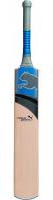 New, natural-faced cricket bats need to be oiled and knocked in.
OILING YOUR BAT
All bats that have a natural face (uncovered) need to be oiled with cricket bat oil throughout their life to maintain moisture levels in the willow fibres. This will reduce the chance of cracking or splitting during use. The correct type of oil to use on your bat is natural linseed oil (we sell this in store).
How to apply oil to new bats
The best way to apply oil to a cricket bat is by using a paintbrush. Lightly coat the face of the bat, edges and toe of the blade. Take care to avoid the stickers, logos and the splice area. Generally 3 to 4 light coats should be sufficient initially, and then apply one coat every 3 to 4 weeks thereafter. Allow each coat to dry, placing the bat in a horizontal position, before the next coat is applied. REMEMBER: use light coats only – you risk more damage to the cricket bat by over-oiling rather than under-oiling.
KNOCKING IN
‘Knocking in’ your new cricket bat is VITAL for its survival. This is the process by which the fibres of the willow in the face and edges are compressed together to form a barrier, which protects the bat against the impact of the ball. Effective ‘knocking in’ will significantly improve the performance and increase the lifespan of the bat. We also recommend that factory pre-prepared bats need extra preparation by further knocking in using a mallet.
How to ‘knock in’ your bat
Step 1: Using a special bat mallet, strike the bat repeatedly across and down the front of the blade. You should gradually apply more force over time. This conditioning must be performed with patience. Particular attention should be given to hardening the edges to minimise damage from an edge shot. This can be done by deflecting the mallet across the edges, not at right-angles. We also recommend ‘boning’ the edges, which involves running the handle of the mallet down the edges to compress them. The bat’s toe area should be struck carefully as there is risk of causing cracks or splits across the base of the bat if it is struck too hard. This step takes between 8 to 10 hours to complete.
Step 2: To ready your bat for match use, you should use your bat against throw downs in the nets or by giving short catches. Make sure the ball you are facing is a quality old ball. This should be done for at least 2 hours. If seam marks, small surface cracks or indentations are visible, immediately go back to Step 1 for further preparation for at least 2 more hours. This is not sign of a faulty bat – it simply means that the bat requires further attention.
Once these steps have been completed, your bat should be ready to use in matches. You should try to avoid use against a new ball initially. If this can’t be avoided or you are an opening batsman, you should purchase extratec for added protection.
DUAL T20 CRICKET BAT
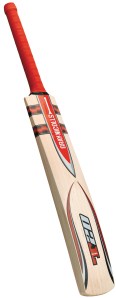 Sportsmart Director Gerrard Woods speaks to Gray-Nicolls’ chief bat maker and the designer of the DUAL T20 cricket bat, Stuart Kranzbuhler.
Q. What made you think of creating this cricket bat?
It came about because first class and international cricketers were using the back of conventional-shaped cricket bats to play reverse paddle shots. It made it a high risk shot because of the spine on the back of the bat, let alone the damage that was occurring because the bat was not pressed on the back.
Q. How is it made?
We looked at which areas the players were hitting on the back of the cricket bat and found it was mainly the bottom 8–10 inches. We then gradually pressed the back of the bat after it was already made until it had a flat area 10 inches long. It does not compromise the power in the traditional face because no willow has been removed from the back so the density is still the same.
Q. What type of player would benefit from using the DUAL T20 cricket bat?
The DUAL T20 cricket bat has been developed for players who are inventive and looking to maximise their scoring options.
Q. What kind of shots can be played with it?
All the traditional shots as normal, but this cricket bat opens up the area behind point to the keeper. Using a normal bat all you can really do is guide the ball through this area. Using the DUAL T20, you can punch the ball with plenty of power and accuracy or use it to reverse drive past the keeper. When facing a spinner it will also save you a second or two by not needing to switch hands to reverse sweep. This will give you until the last moment to get into position to play the reverse sweep so the bowler won’t get time to adjust before releasing the ball.
CHOOSING FITNESS EQUIPMENT
Sportsmart Clayton/Olympic Fitness Store Manager, David Scerri
Q. How should I choose which type of fitness equipment to buy?
Start by thinking about what types of exercise you enjoy. If you don’t enjoy riding, don’t buy an exercise bike. If running bores you to tears, avoid a treadmill. Remember that if you don’t enjoy your training time you’ll never keep it up. For most goals, 30+ minutes a day, 5 to 7 days a week is all it takes!
Q. I’ve chosen which type of equipment to buy, but there are so many variations. How do I select the machine that best suits me?
There are many variables to consider when choosing your new exercise machine. They can be as important as how heavy or tall you are, or as simple as finding the quietest or the one that best suits the size of your room. In the end, however, the best way to select an exercise machine is to just try it out – just like choosing a pair of shoes – and if it feels good, it is most likely right for you.
The four big considerations are horsepower, deck size, programs and top speed. While these seem simple, the horsepower and programs options can prove to be confusing to customers.
Horsepower is often marketed in a manner that is designed to trick a buyer who sees a bigger number and so assumes a better motor. The important figure to consider is the machine’s continuous horsepower, rather than its peak horsepower.
When buying a treadmill, it helps to get your head around the different program options and what you think will best suit your needs. Programs are not all the same; a majority of treadmills use generic, slightly differing versions of their competitor’s programs. Simply asking for ‘incline only’ programs, or the ability to design your own program, will help to narrow down your choices. If programs aren’t important to you, ignore this feature and look at other areas of the machine.
Deck size, in my opinion, is highly over-rated and adds many dollars to your choice. Width is far more important than length if you’re of average height. Length is important to all those who intend on running quite fast or sprinting, but is rarely worth looking at if you intend to use your machine to jog lightly, or even walk.
Bikes, cross trainers and bench presses simply have to suit your height and weight. These are the simplest of all machines to choose, as there are no major components to worry about. Consoles all look very different but when looking below $1500 they all do much the same thing. A bench press has to suit your strength requirements – most wont hold much more than 250kg, but most people don’t require more than that.
 blog.sportsmart.com.au