
Category: FITNESS & RUNNING
HOW MANY MINUTES SHOULD YOU RUN ON A TREADMILL?
The treadmill allows people to walk, jog or run on a revolving track. This is a great tool to improve your overall fitness level. A common problem people face when using a treadmill is not knowing how long or how hard they should be training.
Aerobic training
Aerobic exercise is the purpose of using a treadmill. This involves running at a static pace for a prolonged period of time. As a result, you increase your heart rate and keep it up for the duration of your workout. If you are new to exercising, start by only running 15 minutes a day for a few days a week. This will help your body slowly adjust to working out.
As you progress, start by increasing your pace to make it more difficult. Then begin to increase the time spent on the treadmill. Go up 5 to 10 minutes a workout when you feel you can hold your pace for longer without having to slow down. The optimal workout should keep you on the treadmill between 30 minutes and one hour. You should not be running for more than an hour unless you are training for cross country running.
Always start your workout with a five minute warm up phase. This includes light jogging and stretching. Then begin your workout and finish with a five minute cool down phase similar to your warm up.
Advanced training
High intensity interval training is an advanced method of training your cardiovascular system. Doing high intensity training on a treadmill is a much more effective way of increasing your metabolism and decreasing your fat and calories than aerobic exercise. However, it is much more difficult on your body. As a result, you would spend less time on the treadmill than you would doing aerobic training.
High-intensity training rapidly increases your heart rate and then allows it to fall back down prior to the next set. Therefore, you will be training at maximum capacity for a short period of time and then allowing your body to regain its composure before continuing your exercise. For example, you sprint for 20 seconds as hard as you can and then lightly jog for a minute while you catch your breath. That is considered one training interval.
When you first begin exercising, limit yourself to only ten minutes of interval training. Then as improve your level of fitness you can increase your workouts by five minutes at a time. Your interval training should last between 10 and 30 minutes. This includes a warm up and cool down. You should not be running for more than 40 minutes on your treadmill.

AB WORKOUT FOR BEGINNERS
Your ab muscles maintain balance, provide an energy base and keep your waistline in check. The following exercises tone and strengthen your ab muscle groups. Most abdominal exercises incorporate other parts of the body which is a bonus so your arms, legs and back which will benefit as well.
The basic crunch is very similar to a sit up. Begin by lying with your back on the floor, knees raised and the soles of your feet touching the ground. Then put your hands behind your head or you can cross them over your chest. Lift your upper torso slightly so that your shoulders and upper back are off the ground but your spine is stationary. Lower down to the ground and repeat. You can switch up your crunch so that it targets different muscle groups. Crunch in a particular direction i.e. lifting the shoulders towards the right or the left.
The plank is a simple and powerful exercise. Lay on your stomach on the floor, put your elbows on the ground in front of you and use your fists to make a triangle. Push your stomach off the ground with your feet. The goal here is to try and make your body as flat as possible, so use your abs and glutes. Hold the pose for at least 30 seconds and as you get better you can increase the time you hold the pose for. You can challenge yourself by lifting one leg off the ground.
Although squats are traditionally used for toning your thighs and glutes, abs are an essential part of the equation because they maintain balance. Start by standing up straight with your legs shoulder width apart, knees and toes facing forward. Bend your knees as if you were planning to sit down in an invisible chair. Do not bend so far that your knees go past your toes. Return to standing and tighten your stomach as you do so. Repeat 20-30 times. Challenge yourself by holding this position for 30 seconds.
CLUBPT VIP DAY TODAY!
All members of the Sportsmart ClubPT program are invited to a special VIP day at all Sportsmart stores. If you are a ClubPT member simply present your ClubPT card or quote your ClubPT number at the registers to take advantage of our great specials and boost your ClubPT points.
There are huge savings across health and fitness products!
30% rubber dumbbells
30% of polar heart rate monitors
20% off magnum weight plates
20% off kettlebells, medicine balls and exercise mats
50% off foam rollers
50% off Olympic Fitness boxing
20% off full priced running and cross training footwear
20% off Skins compression
20% off Under Armour
20% off running clothing
The following PT Packages are available at Moorabbin. Remember if you are shopping at other stores you can order these fitness packages from Moorabbin.
Dumbbell packages:
Aframe dumbbell rack – 1-5kg rubber dumbbell pairs valued at $259.95 available for $119.95 (10 only)
Large Upright dumbbell rack – 1-10kg rubber dumbbell pairs valued at $859.95 available for $450 (5 only)
Three Tier dumbbell rack – 1-20kg rubber dumbbell pairs valued at $1740 available for $950 (5 only)
Weight packages
180kg weight package – 4X10kg, 4X15kg, 4X20kg weight plates valued at $540 available for $360
100kg weight package – 4X5kg, 4X10kg, 4X15kg weight plates valued at $300 available for $210
These offers are for TODAY ONLY! Don’t miss out!

DEVELOPING YOUR FOOTWORK IN BOXING
A boxer must have rhythm, timing, power speed and quickness when they enter the ring. These characteristics are all based on footwork. To be an effective boxer, an athlete must be able to put themselves in a position to throw punches while also be able to avoid punches.
A god boxer will be on their toes as they move around the ring. Usually boxers in lower weight categories tend to be lighter on their toes compared to bigger boxers who are more flat footed and look for the knockout blow. It is important to move around the ring and learn how to throw effective punches on the move from a balanced position.
Running around the ring and trying to stay away from your opponent is simple enough, however trying to move around and throw effective punches with power is quite difficult. This skill takes hours of training and sparring. As the boxer moves around the ring, they must be able to steady themselves in order to throw an effective punch. If the back foot is not steady for even a fraction of a second as the punch is thrown, the punch will lose its effectiveness. It is important to remember that if you stay in the same spot for too long you will become vulnerable.
In order to develop great footwork and both deliver and avoid heavy punches, it is important train and condition. Many boxers get into shape by running and jumping rope. Combined with an efficient diet that avoids junk food, the boxer will find themself in a more efficient position and be able to use footwork to their advantage.
HOW TO MAXIMISE A WALKING WORKOUT
Walking is a great workout that most people can do. There are many ways you can improve your walk and get more out of it every time you hit the pavement.
Start your day off with your normal walk but instead of walking as you normally do try power walking. Swing your arms in an exaggerated manner as you briskly move your legs. The difference between power walking and jogging is that with power walking one foot is always on the ground. Try to power walk daily.
Do climbing or rolling hill walking exercises on the treadmill. This will provide a difficult workout that changes in pace, strength and skill. Basically it is meant to mimic climbing a mountain or hill. This type of workout will work your calves, thighs and hips. Make sure that you wear appropriate running shoes and keep your feet flat on the treadmill at all times.
You can also wrap ankle weights around your ankles to maximise your daily walk. You can take it one step further and wrap wrist weights as well. This will increase the difficulty level and force you to work harder with every step. At first it may make your wrists and ankles sore but that is just your body getting used to the extra weight, with time it will become easier. Try walking using the toe ball heel method. As your foot comes down, have your toe meet the ground first and then let your foot slowly glide down to the ball and lastly the heel. This will relieve pressure on your knees and ankles.
THE KETTLEBELL 102: TRANSITION FROM DEADLIFT TO SWING
Jeremy ‘Dave’ Davies is the Store Manager at Sportsmart Kilsyth, but he has also been an infantry soldier, boxing instructor, personal trainer and Australian Kettlebell Instructor. Apart from basketball, he competes in Girevoy Sport Weightlifting – the traditional Eastern European/Russian sport of kettlebell lifting. You can visit his website www.wix.com/kgbtrainer/kgbpt for more information and training tips. He has taken the time to provide some information and training tips on strength bags.
Once you’re confident with your deadlift posture, your spine remains neutral throughout and you’re getting a nice fluid and full range of movement, it’s safe to move on to one of the most fundamental and beneficial ballistic kettlebell lifts: the swing.
There is no better single exercise that combines calorie crunching cardio, core strengthening, power development and metabolic-rate-spiking resistance training all in one.
To make the transition we begin with Pendulum Swings.
Start from the bottom of the deadlift action, with the kettlebell still on the ground and your hands on the handle. Lift using the normal deadlift upward motion, but stop about ten centremeters off the ground.
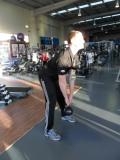
Pause and make sure your back alignment remains neutral: if it doesn’t, put the kettlebell down and start again.
Now comes the tricky part: keeping your eyes up, pull the kettlebell back between your legs (maintain that neutral spine posture!) and let the kettlebell swing back without applying any pressure yourself. Let the kettlebell have its way. Then pull it back again.

Don’t look down at the kettlebell. It’s not going anywhere.
Repeat this for around 30 seconds or so and then have a rest.
Once this basic pendulum swing feels comfortable, prepare to swing for real. Every four or five pendulum swings, as the kettlebell is swinging forward under its own momentum, stand up straight, keeping both your arms straight.
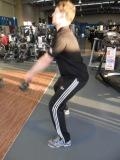
Don’t worry yet about how high you swing it, just make sure you’re not pulling it up.
As the kettlebell begins to swing back, drop down again into the lowered deadlift position and do a few more pendulum swings.
Once again, do this for around 30s before resting again.
As you confidence grows, lessen the amount of pendulum repetitions between full swings. As you develop toward swinging the bell without pendulums, start to squeeze your abdominals as the kettlebell swings up. Imagine you are about to be hit in the stomach each time.
Never lean back as the kettlebell swings up: you are going from your low deadlift position (as the kettlebell swings back through your legs) to ramrod-straight, like a pole in cement. The quicker you do this, the easier the lift will be, and the more weight you will be able to swing. You re not lifting with your shoulders: but with your hips.
If at any time in a set of swings you are so fatigued that you can no longer brace your abdominals, take a short rest.
Once again, any further questions regarding kettlebell training, why not drop in for a chat with me at Sportsmart Kilsyth!
HOW TO MAKE A GYM WORKOUT FUN
Going to the gym everyday does lose its appeal quickly. It may have been fun when you first joined up, but suddenly you find yourself making excuses not to go. It is natural to feel bored when you are doing the same thing everyday but there are ways that you can make your workout fun and motivate yourself to enjoy going to the gym.
Develop a workout routine that keeps things interesting. Change it up every other day so that you don’t get bored. Alternate your gym workout between cardio and weights. Plan which days you will focus on cardio and which days you will work on your muscles.
Choose an exercise machine or exercise which you enjoy most. Plan to do it at a time that you feel most motivated i.e. starting your workout with that particular machine or exercise to give yourself motivation to actually get to the gym or last so that you can get through your workout knowing you will end it doing something you enjoy.
Go to the gym with a friend. This makes your workout more fun as you have someone to talk to and you can motivate each other on those days where you don’t feel like going at all. Sign up to classes at the gym whether it’s spinning, yoga or Zumba. Mix up your typical gym work out and give yourself something different to look forward to.
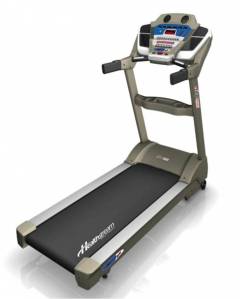
HOW TO TAKE CARE OF YOUR TREADMILL
After putting in so much time and effort to try out, pick and assemble your treadmill you now have to make sure that you take excellent care of it to ensure that you get the most use out it. It isn’t extremely hard work but it is worth it to ensure that a year from now you are not going through the same process of having to replace your fitness equipment. This guide will teach you how to look after your treadmill and give you all the information you need to keep it in great shape.
The first important tip we can give you is to purchase a mat to go underneath your treadmill. A treadmill mat isn’t primarily used to protect your floor; it is used to protect your treadmill. A treadmill’s motor gathers static charge when you use it. The charge will then suck dust, lint and debris into your motor which will cause it to clog. The more gunk in your motor, the worse it will run and its lifespan will decrease. You can purchase mat’s and flooring for fitness equipment from Sportsmart. Simply ask our fitness staff and they can guide you in picking something that will protect your treadmill.
Make sure to clean and dust your treadmill every other week. Take care with the belt area as the build up of dust and gunk needs to be cleaned straight away. Also, remember to keep your power cord away from the base of the treadmill and incline mechanism. Many cords tend to be replaced for those reasons.
One of the main problems with most treadmills is in the control board. A treadmill’s control board is much like a computer in that it is subject to surges. The best way to protect your treadmill’s control board is to unplug the treadmill when you are not using it.
If you’re unsure about how to take care of your treadmill, our fitness experts are able to help you after you make your purchase and guide you on how to take the best care so that your treadmill lasts you for years to come.
EXERCISING WHILE AT YOUR OFFICE
Most people tend to spend most of their day on a chair as part of their work. Therefore the abdominal muscles, back, arms and legs rarely get a workout during a typical working day. Many workplaces are now recognising the need to keep their staff healthy and active. Exercise increases energy levels, boosts morale and improves productivity. Some companies are even going to the extent of incorporating gyms with various types of fitness equipment into their offices. However, for those who do not have that luxury there are simple types of equipment that can be used at your workspace.
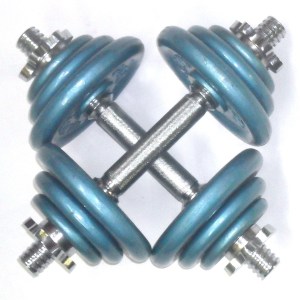
Dumbbells are considered to be one of the most useful and popular pieces of exercise equipment for the office. They are reasonably priced and vary in weight. Dumbbells are ideal for a short work out and weight training and can easily be placed under your desk or in a drawer. Ankle weights are small, weighted bags that are fitted above the ankle. They are adjustable and will fit many ankle sizes. Ankle weights are used to tone legs, strengthen calve muscles and improve balance. You can use them while sitting on your chair as they are not recommended to be worn while walking around.
Resistance bands are made of stretchable, synthetic materials. They come in different degrees of resistance and vary from light to heavy. A resistance band workout tones the muscles in your back, chest, arms and shoulders for overall strength conditioning.
An exercise ball is ideal for strengthening the core muscles in your back and abdomen. A ten minute exercise ball workout between meetings or on your lunch break can help with overall conditioning, stability and balance. It can be used for various exercises including back extensions, balance roll, hip extensions, ab roll, ball twist etc.
You can view our fitness products online or visit our stores to get expert advice from our fitness staff to select equipment suited to your work out needs.
WEIGHT BENCH EXERCISES
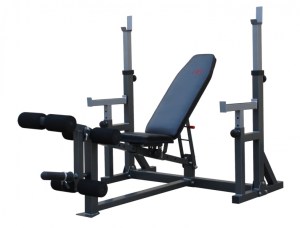
The weight bench is a standard piece of equipment involved in weight training. There are many exercises that can be done using a weight bench.
- Chest
A weight bench is ideal for developing your chest. The best exercise for developing pectoral muscles is the bench press. For this exercise, you lay on your back and lift the barbell up and down. Dumbbell flys are also good for the chest. This exercise involves you lying on your back and grasping a dumbbell in each arm and then bringing them upward until they nearly meet over the chest.
- Arms
A weight bench with a seat which can be inclined is perfect for developing your arms using seated dumbbell curls. Bend the weight bench at an angle and lean back against it while gripping a dumbbell in each arm and curling the arm upward. To use the weight bench to work out the back of your arm, do a bench tricep extension. This involves you lying on your back with a barbell held behind your head and then bringing it forward to rest directly over your head before returning to the starting position.
- Neck
By adding a neck harness your weight bench can be used to exercise your neck. Perform neck flexions using a harness that is strapped completely around the skull and to which a weight is attached. Lay down on the bench with your shoulders at the end of the bench so that your neck hangs off. Use the muscles of the neck to bring the weight up and slowly back.
- Abdominals
The weight bench can be used to work your abs and create a six pack and you don’t even need to use weights. The weight bench is an excellent way to exercise your abs if you have trouble with normal sit ups and crunches. Basically sit on the edge of the bench and lean back. Make sure to support yourself by holding on to the bench edges on either side. Stretch your legs out in front of you and then pull them back so that your knees are bent, then return to the starting position.
Sportsmart stocks a variety of weight benches to suit your workout needs. You can view our weight benches online or come into our stores to try them out and get expert advice from our fitness staff on choosing a weight bench that is suited to your exercise needs.
 blog.sportsmart.com.au