
Category: CRICKET
CRICKET TRAINING TIP: SPEED
Cricket requires players to have great speed and to be able to perform an explosive start, whether for batting and making runs, a run-up for bowling, chasing balls or backing up players when fielding. This means that players need to get moving quickly and strongly, and must maintain that speed over certain distances on the ground.
The following drills are designed to help develop quick footwork, speed and power. Please follow these guidelines before beginning a session;
• Try to keep a work-to-rest ratio of 5:1. For example, a 6 second sprint should be followed by approximately 30 seconds walking recovery.
• Speed training drills should be performed when you are fresh. Don’t attempt these drills after a long endurance run or a heavy strength-training workout.
• Make sure you are fully warmed up before starting a speed training session. A warm-up should consist of 10 minutes light cardio followed by some stretches.
DRILLS
• Bounding – Set up a 50m distance. Start jogging on the spot with high knees, then bound to the end and jog back and repeat.
• Alternating striding – Set up cones over 100m distance. Place the cones 1m apart for the first 50m, and 2m apart for the second 50m. Striding out, make sure your feet match up with the cones. You should have shorter strides for the first 50m and longer strides for the second 50m. Jog back to the start and repeat.
• Accelerating sprints – Set up cones covering a distance of 100m. Start with a jog at one end, then gradually accelerate to reach full speed at the halfway point and continue to sprint to the end. Slow down gradually to a jog, turn and walk/jog back to the start. Repeat.
• Alternating starts – Set up cones covering a 20m distance. The aim of this exercise is to get out as fast as possible and build up as much speed as you can within 20m. To add variety, mix up the start as much as possible. For example, begin jogging on the spot, lying down on your back or stomach, perform push-ups or squats before taking off.
• Weave in and out – Set out cones diagonally from each other over a 50m distance. Sprint to one cone, then push up and sprint diagonally to the other cone. Repeat for the entire length of cones, creating as much speed as possible.
Personal trainer, Tavia Ambler
(www.taviastraining.com.au)
THE CRICKET SALE
 Get down to Sportsmart’s annual cricket sale at our warehouse – 21 Viking Crt, Cheltenham.
Open again this Thursday 17th, Friday 18th, Saturday 19th and Sunday 20th September.
Take a sneak peak at the massive specials at http://www.thecricketsale.com
DON’T MISS OUT!
HOW TO: PREPARE A CRICKET BAT
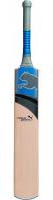 New, natural-faced cricket bats need to be oiled and knocked in.
OILING YOUR BAT
All bats that have a natural face (uncovered) need to be oiled with cricket bat oil throughout their life to maintain moisture levels in the willow fibres. This will reduce the chance of cracking or splitting during use. The correct type of oil to use on your bat is natural linseed oil (we sell this in store).
How to apply oil to new bats
The best way to apply oil to a cricket bat is by using a paintbrush. Lightly coat the face of the bat, edges and toe of the blade. Take care to avoid the stickers, logos and the splice area. Generally 3 to 4 light coats should be sufficient initially, and then apply one coat every 3 to 4 weeks thereafter. Allow each coat to dry, placing the bat in a horizontal position, before the next coat is applied. REMEMBER: use light coats only – you risk more damage to the cricket bat by over-oiling rather than under-oiling.
KNOCKING IN
‘Knocking in’ your new cricket bat is VITAL for its survival. This is the process by which the fibres of the willow in the face and edges are compressed together to form a barrier, which protects the bat against the impact of the ball. Effective ‘knocking in’ will significantly improve the performance and increase the lifespan of the bat. We also recommend that factory pre-prepared bats need extra preparation by further knocking in using a mallet.
How to ‘knock in’ your bat
Step 1: Using a special bat mallet, strike the bat repeatedly across and down the front of the blade. You should gradually apply more force over time. This conditioning must be performed with patience. Particular attention should be given to hardening the edges to minimise damage from an edge shot. This can be done by deflecting the mallet across the edges, not at right-angles. We also recommend ‘boning’ the edges, which involves running the handle of the mallet down the edges to compress them. The bat’s toe area should be struck carefully as there is risk of causing cracks or splits across the base of the bat if it is struck too hard. This step takes between 8 to 10 hours to complete.
Step 2: To ready your bat for match use, you should use your bat against throw downs in the nets or by giving short catches. Make sure the ball you are facing is a quality old ball. This should be done for at least 2 hours. If seam marks, small surface cracks or indentations are visible, immediately go back to Step 1 for further preparation for at least 2 more hours. This is not sign of a faulty bat – it simply means that the bat requires further attention.
Once these steps have been completed, your bat should be ready to use in matches. You should try to avoid use against a new ball initially. If this can’t be avoided or you are an opening batsman, you should purchase extratec for added protection.
HOW TO: PREPARE FOR THE SEASON
The 2009/2010 cricket season is fast approaching, so it’s time to start thinking cricket. I’m personally very excited about the coming season as well as the current Ashes Series.
Right now, pre-season training is underway and that means batting, bowling and fielding drills. It is time to think about what you need to work on and what equipment you need to have a successful and enjoyable cricket season.
So, assess the contents of your cricket bag then come in and see our brand new range and last season specials.
Sportsmart Moorabbin Bat and Ball Manager, Tom Kilpatrick
DUAL T20 CRICKET BAT
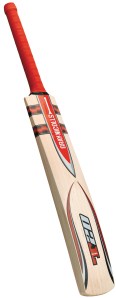 Sportsmart Director Gerrard Woods speaks to Gray-Nicolls’ chief bat maker and the designer of the DUAL T20 cricket bat, Stuart Kranzbuhler.
Q. What made you think of creating this cricket bat?
It came about because first class and international cricketers were using the back of conventional-shaped cricket bats to play reverse paddle shots. It made it a high risk shot because of the spine on the back of the bat, let alone the damage that was occurring because the bat was not pressed on the back.
Q. How is it made?
We looked at which areas the players were hitting on the back of the cricket bat and found it was mainly the bottom 8–10 inches. We then gradually pressed the back of the bat after it was already made until it had a flat area 10 inches long. It does not compromise the power in the traditional face because no willow has been removed from the back so the density is still the same.
Q. What type of player would benefit from using the DUAL T20 cricket bat?
The DUAL T20 cricket bat has been developed for players who are inventive and looking to maximise their scoring options.
Q. What kind of shots can be played with it?
All the traditional shots as normal, but this cricket bat opens up the area behind point to the keeper. Using a normal bat all you can really do is guide the ball through this area. Using the DUAL T20, you can punch the ball with plenty of power and accuracy or use it to reverse drive past the keeper. When facing a spinner it will also save you a second or two by not needing to switch hands to reverse sweep. This will give you until the last moment to get into position to play the reverse sweep so the bowler won’t get time to adjust before releasing the ball.
CRICKET TRAINING TIP: FLEXIBILITY
Flexibility can improve performance and reduce injury risk by helping movement of joints and surrounding muscles through a full range of motion. Flexibility is important for batting, bowling, catching and throwing as well as sprinting, running and all other movements carried out on the field. Lack of flexibility can lead to injury as well as a poorer performance of skills such as speed, agility, strength and overall endurance. Doing these exercises before a game will help improve flexibility and therefore range of movement:
• Adductor kneeling – kneel with one foot on floor, position torso to inside of upper thigh with hands on the floor, then lower torso and hold stretch.
• Wall push, to stretch calf muscles
• Glute stretch – lie on back with one ankle on opposite knee. Reach in behind hamstring and pull towards chest.
• Hamstring stretch
• Hip flexor stretch
• Lower-back stretch – lying on back, pull one knee in towards your chest and then across the body (push knee down towards to ground).
• Arm rotations, forward and back
• Posterior shoulder stretch – crossing one arm across your body and holding in position with the other arm, then repeating on the other side.
Make sure you are warmed up prior to stretching and don’t allow stretches to become too painful or uncomfortable.
Personal trainer, Tavia Ambler
(0433 826 944)
Bring on the Ashes
At this time every four years I am getting excited about the Ashes Series. There is something so appealing about the sport of cricket – both watching it and playing. While I am a batsman, one of my most admired players was Adam Gilchrist. I love the roller coaster of emotions that comes with following a test match, the history of the game and the legends who have made it what it is today. But, mostly, I like the special place it holds as part of our national culture.
Gerrard Woods
Director, Sportsmart
Adidas Cricket Australia World Cup Twenty20 shirts
New Adidas Cricket Australia World Cup Twenty20 shirts are now in store!


 blog.sportsmart.com.au